Monday, January 16, 2012

P-47

P-47 Thunderbolt, 'Jug'
Republic
C L I C K     T O     E N L A R G E


Pilots called it the Jug.  Public Relation types would have you believe its short for juggernaut.  Don't believe it.  Its a big, stout plane that reminds people of a jug... as in a jug of brew.  It was the brainchild of a couple of Russian immigrants.  Alexander Seversky founded the company that was to become Republic Aviation and his design engineer, Alexander Kartveli, believed in planes having size and strength.  The P-47 was the largest single seat prop fighter ever made, with a reputation for bringing its pilot home despite tremendous damage.    
Picture:  1024 x 768 at 377 dpi - Scenic Reflections

P-47D
Crew:                    1

Power:                  Pratt & Whitney 2535 hp R-2800-59 
                              Double-Wasp 18 cylinder radial engine

Max. Speed:        697 kph / 433 mph
Ceiling:                 12,495 m / 41,000 ft
Range:                 3060 km / 1900 miles with three drop tanks
Climb:                  976 m / 3200 ft per minute

Weight -
Empty:                 4513 kg / 9950 lb
Max. Take Off:    7938 kg / 17,500 lb

Size -
Wingspan:          12.4 m / 40 ft 9 in
Wing Area:         27.87 sq m / 300 sq ft
Length:                11.02 m / 36 ft 1 in
Height:                 4.47 m / 14 ft 8 in

Armament:
                            8 - 12.7 mm / 0.5 in machine guns
                            1134 kg / 2500 lb bombs and rockets


Invasion stripes made is easier for Allied troops on the European continent in 1944 to quickly determine friend from foe.  The rugged P-47 was second to none in the ground support role.  Its size and weight made it less agile as a fighter than the Me-109 and FW-190.  Its thirst for fuel made it less suitable as a long range escort fighter than the P-51 Mustang.  But when war broke out in Korea in 1950 they scoured the land hoping to find P-47s to be their fighter-bomber and, finding too few, had to settle for the less durable and somewhat fickle Mustang to fill the need.  
Picture:  1152 x 864 - Reddit


Prior to the introduction of the P-47D to Europe in April, 1943 there had been a number of engineering problems still needing resolution, particularly with its massive 2,500 hp air cooled engine.  The plane had to be built to the scale of the powerplant and its twelve foot diameter propeller.  It was not a fighter designed for close-in-turning dogfights so pilots relied upon brute speed and devastating firepower.  
Picture:  1280 x 925 at 300 dpi - World War II Vehicles


Taking an idea from the British Spitfire both the P-51 Mustang and the P-47D modified their design to incorporate a bubble canopy to eliminate their Razorback design blind spot.  The P-47D also improved the armor protecting the pilot.  A third drop tank was added to the two already available for the wings but the additional fuel still wasn't enough for many escort duties with the B-29 in the Pacific.  A larger P-47N was introduced in 1945 to hold additional fuel but its ungainly size and weight made it unsuitable to fill the fighter role.
Picture:  1500 x 1079 at 150 dpi - NASA           


The most vulnerable position for a pilot could well be his 6 o'clock, that which is directly behind him.  This early Razorback design guarantees this to be a blind spot.  Dogfights usually last only a handful of seconds with the pilot that sees the other pilot first the most likely to come away alive.  Experience quickly dictated the bubble canopy.
Picture:  1024 x 768 at 96 dpi - Scenic Reflections


Believing the war to be won the Army Air Force's commanding officer, General Arnold, ordered all planes to remain unpainted, without the normal camouflage coloring.  It was intended as a statement of confidence to enemy and allies alike.  The order took effect in the fall of 1943.     
Picture:  450 x 305 at 75 dpi - How It Flies   


The technique for a strafing mission was to weave and turn continually.  With targets being primarily on the ground the eight wing-mounted machine guns were sighted to converge at roughly a thousand meters or yards.  In the European Theater P-47s were credited with destroying 6,000 armored vehicles and 9,000 locomotives.  If those numbers are accurate it's hard to imagine much moving on rail by 1945.
Picture:  500 x 332 at 300 dpi - Aviation Spectator  


A plane just off the design board can be a performance champion.  Then they need to be equipped for combat - armor protection, bullet-sealing fuel tanks, large guns and ammunition, plenty of fuel for range, wing pylons, drop tanks, bombs and rockets.  Now your warbird is beginning to lumber and, without a turbocharger, the engine is definitely wheezing for air.  To keep the Japanese Zero a fast, agile dogfighter it went without many of these items including armor protection and self-sealing tanks.  Expert pilots made the Zero deadly.  Inexperienced pilots found it an unforgiving deathtrap.
Picture:  2807 x 1394 at 314 dpi - Daniel D. Eubank    


Sunday, January 15, 2012

P-38

P-38 Lightening
Lockheed
C L I C K     T O     E N L A R G E


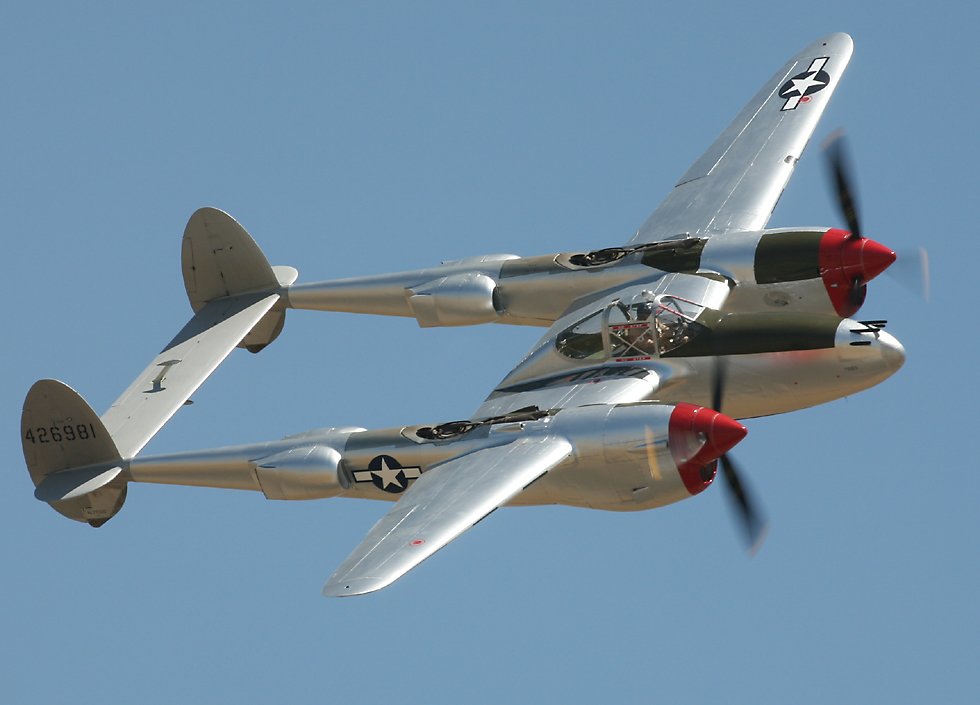
Pilots found the P-38 easy to fly because its center of gravity was below its center of lift which made it extremely stable.  It was actually too stable to be a good fighter and it was easily out-maneuvered by its German counterparts, the Me-109 and the FW-190.  It was replaced as an escort fighter in the European Theater by the P-47 Thunderbolt and the P-51 Mustang.
Picture:  980 x 705 - Richard Seaman

P-38J
Crew:                    1

Power:                  2 - Allison 1425 hp V-1710-89 in-line piston engines

Max. Speed:        666 kph / 414 mph
Ceiling:                 13,411 m / 44,000 ft
Range:                  3636 km / 2260 miles
Climb:                   1524 m / 5000 ft in 2 minutes

Weight -
Empty:                  5707 kg / 12,580 lb
Max. Take Off:     9798 kg / 21,600 lb

Size -
Wingspan:           15.85 m / 52 ft
Wing Area:          30.42 sq m / 327.5 sq ft
Length:                 11.52 m / 37 ft 10 in
Height:                  2.99 m / 9 ft 10 in

Armament:
                             1 - 20 mm / 0.78 in cannon
                             4 - 12.7 mm / 0.5 in machine guns in nose
                             10 - 12.7 cm / 5 in rocket projectiles
                             908 kg / 2000 lb bombs


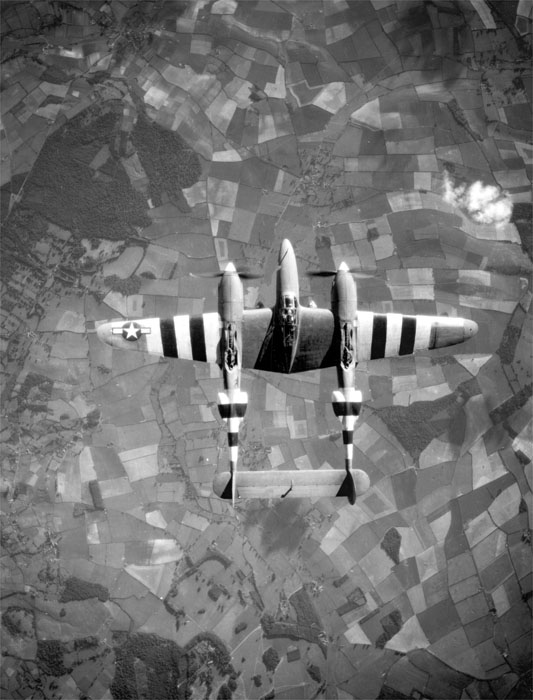
The P-38 did well in the Pacific as a fighter but in Europe it was used primarily for ground attack, strafing targets of opportunity and performing the role of a tactical bomber.  Its great speed also made it invaluable as a reconnaissance aircraft.  Of the 10,000 P-38s produced 1,400 were modified to perform photo reconnaissance.  
Picture:  533 x 700 - Wikipedia


The only way Lockheed could meet Army Air Force specifications for a fighter in 1937 was to give its aircraft two engines.  Without turbochargers the Allison engines provided only mediocre performance above 15,000 feet.  Since the U.S. forbid exporting turbochargers to Europe the British were forced to cancel their order of more than 500 Lightenings.  The Allison engines also proved unreliable in the cold, wet European climate and many aircraft were lost to mechanical failure.
Picture:  780 x 599 at 300 dpi - Wikipedia  


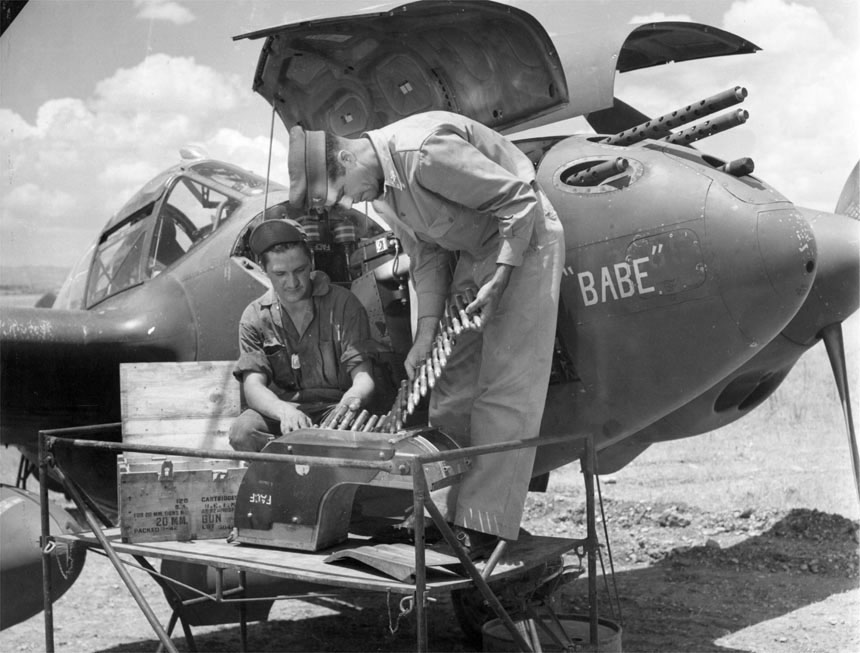
Ammunition rounds need to be inspected to insure they are properly seated in their linkage to prevent jamming.  This pilot is personally verifying the belts are in good order.  You improve your chances of returning to base by taking nothing for granted prior to flying into harm's way.  
Picture:  860 x 653 - Wikipedia


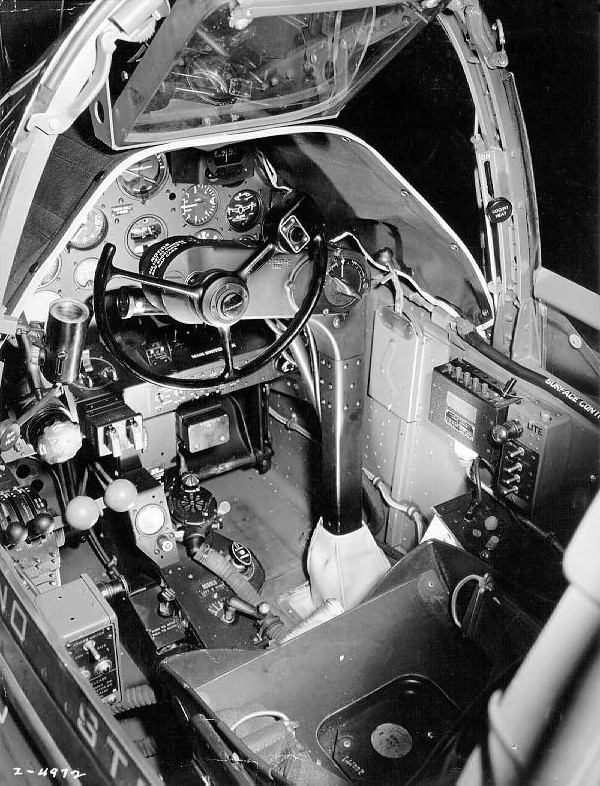
The P-38 cockpit is unusual in having a yoke instead of a control stick to maneuver the aircraft.  Its lack of leverage hampered roll rate and put the Lightening at a distinct disadvantage in a dogfight.  The cockpit was also extremely cold flying at altitude over Europe.  Because the engines are mounted on the wings pilots did not benefit from engine manifold heat to warm them.  They were often numbed by cold as temperatures routinely dropped to well below zero at high altitude.
Picture:  348 x 450 at 75 dpi - Wikipedia


P-38s with drop tanks were used to ambush and destroy the plane carrying Admiral Isoroku Yamamoto, mastermind of the attack on Pearl Harbor.  Tipped off by a decoded message intercept a squadron of Lightenings flew from their base on Guadalcanal to bring down the Admiral's plane over the jungles of Bougainville Island.  
Picture:  1010 x 749 - Wikipedia


Concentrating all weapons in the nose made for a very destructive column of projectiles but also made striking one's target more difficult than having weapons dispersed on the wings.  Still, the inherent stability of the aircraft contributed to it being an excellent gun platform.  It was a feared adversary and was credited with downing more planes in the Pacific than any other aircraft.  Why the disparity in fighter performance between the Pacific and European Theaters?  A couple of factors contributed to Japan's poor performance compared to German pilots.  Many of Japan's best pilots were lost at the Battle of Midway in June, 1942.  These pilots were never adequately replaced because pilot training was reserved only for an elite few.  Also, while the Zero was a superior aircraft in the right hands it proved to be a very vulnerable fighter, having no armor protection for the pilot and containing highly combustible fuel tanks.  American incendiary rounds quickly set them ablaze.      
Picture:  3000 x 2527 at 300 dpi - Wikipedia


Two turbocharged engines provided great power but twin engine aircraft of the time lacked maneuverability.  The P-38 provided bomber escort for the Eighth Air Force until the P-47 and P-51 became available, providing more capable dogfighting ability.  The two factors that limited the P-38's fighter performance most were its slow roll rate and a restricted dive ability.  P-38s could not recover from a near vertical dive at high altitudes and opposing pilots used this to their advantage.  Despite this the P-38 Lightening was a deadly fighter-bomber and its speed and fire power often compensated for its lack of maneuverability.    
Picture:  1024 x 768 - Wallpaper Pimper


Friday, January 13, 2012

B-24

B-24 Liberator
Consolidated
C L I C K     T O     E N L A R G E


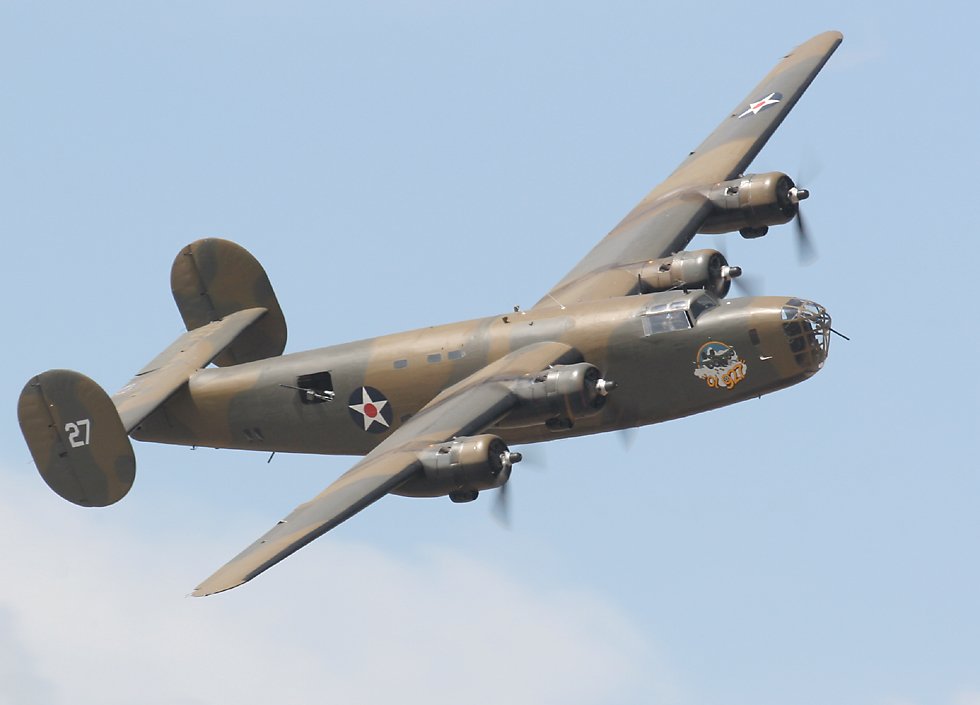
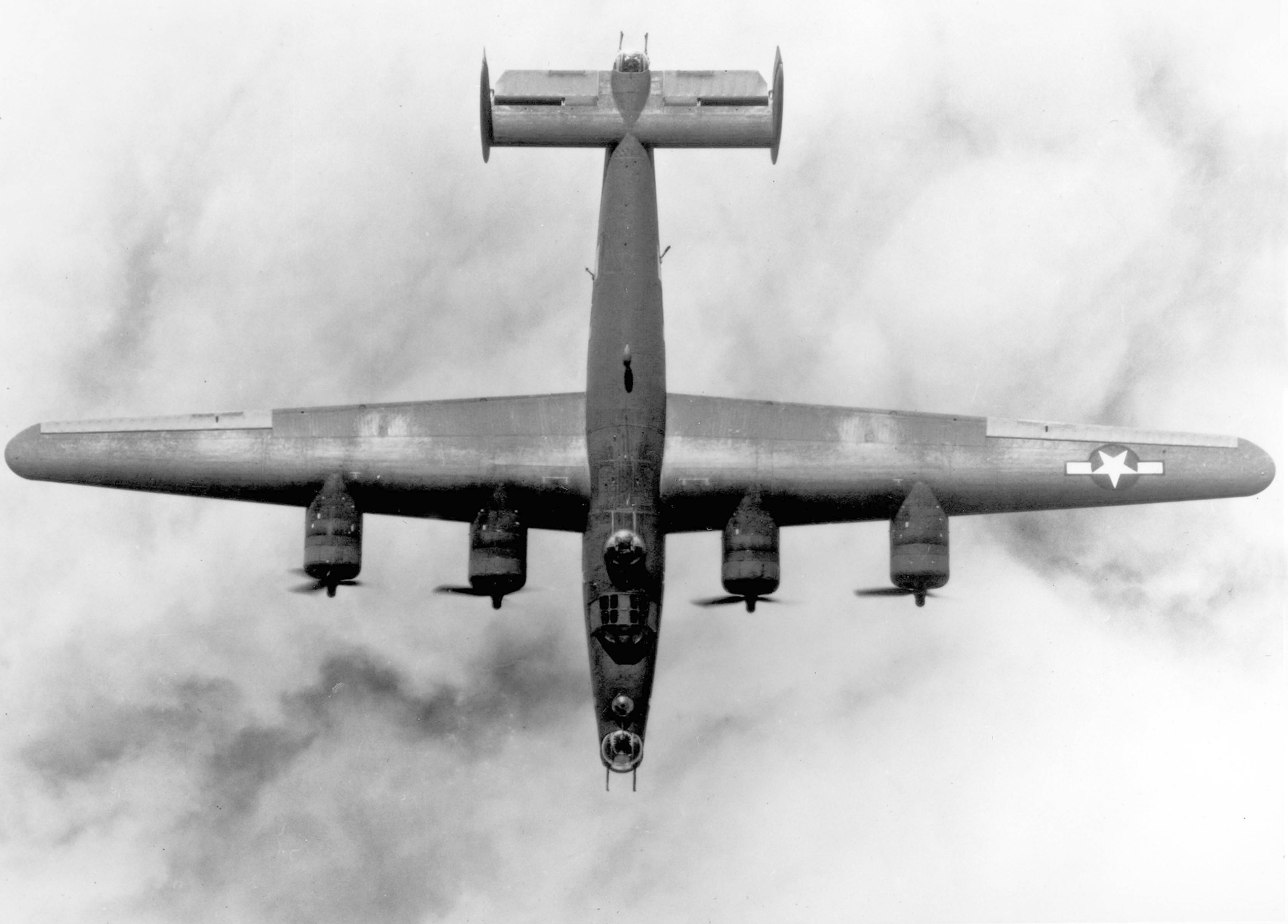
It's high, slender wing gave it lift and range but the B-24 was not very stable and was difficult to fly.  Nearly 20,000 Liberators were produced because they were a workhorse, flying farther and carrying greater bomb loads than the more famous B-17.  Besides Europe and the Mediterranean the B-24 was used in anti-submarine warfare over the Atlantic and as a heavy bomber over long stretches between islands in the Pacific.
Picture:  980 x 705 - Richard Seaman  


B-24D
Crew:                    10

Power:                  4 - Pratt & Whitney 1200 hp R-1830-65 radial engines

Max. Speed:        467 kph / 290 mph
Ceiling:                 8540 m / 28,000 ft
Range:                  3220 km / 2000 miles
Climb:                   6100 m / 20,000 ft in 22 minutes

Weight -
Empty:                 15,436 kg / 34,000 lb
Max. Take Off:    29,510 kg / 65,000 lb

Size -
Wingspan:          33.35 m / 110 ft
Wing Area:         97.36 sq m / 1048 sq ft
Length:                20.47 m / 67 ft 2 in
Height:                5.49 m / 18 ft

Armament:
                            2 - gun turrets in: 
                                                          nose
                                                          tail
                                                          upper fuselage aft of cockpit
                                                          under center fuselage
                           1 - manual gun each side waist (beam) position
                           Total = 10, 12.7 mm / 0.5 in machine guns
                           3995 kg / 8800 lb normal bomb load


The B-24H introduced the powered nose turret to better protect the aircraft from frontal assaults.  Opposing fighter pilots were always probing for weaknesses in a bomber formation's field of fire and successful approaches were quickly disseminated among the attacking squadrons.  
Picture:  1024 x 768 at 150 dpi - Legends in their own Time  


A fully loaded B-24 was a challenge to handle on take off and it was more difficult than the B-17 to keep in formation.  The Liberator's wing design enabled it to fly farther, faster but at a cost of maneuverability and stability.  The famous 1943 raid on the oil refinery at Ploesti was given to the B-24 because it was beyond the range of a B-17.  You may not like flying it but the bottom line for mission planners is getting the job done.
Picture:  665 x 513 at 75 dpi - Wikipedia   


Nearly a third of the 3800 Liberators assigned to the Eighth Air Force were lost in action over enemy territory.  Bombing missions over Germany without benefit of fighter escort were especially hazardous.  The value of strategic bombing was always questioned.  It diverted resources from direct support of one's own military to that of targeting the opposing nation's ability to wage war by destroying or degrading its infrastructure.  Germany's increased emphasis on air defense made the Allied effort more costly and less effective.  How effective the effort was to degrade Germany's ability to wage war is arguable.  A couple of numbers indicate what otherwise might have been had the U.S. and the RAF abandoned strategic bombing.  By 1944 nearly 70 percent of all German fighters were defending the homeland, while only 18 percent were aiding troops on the Eastern Front.  By 1944 only 18 percent of German combat aircraft were bombers, down from 50 percent previously.  Resources that once would have been allocated to offensive purposes were now used to defend Germany's economy with planes, tens of thousands of antiaircraft guns, ammunition, and radar as well as the inefficiencies associated with the dispersal of industry.  The air war was costly to the Western Allies but battling Germany on strictly her own terms, ground troops versus ground troops, would probably have been far more costly.  
Picture:  3088 x 2400 at 300 dpi - How it Flies


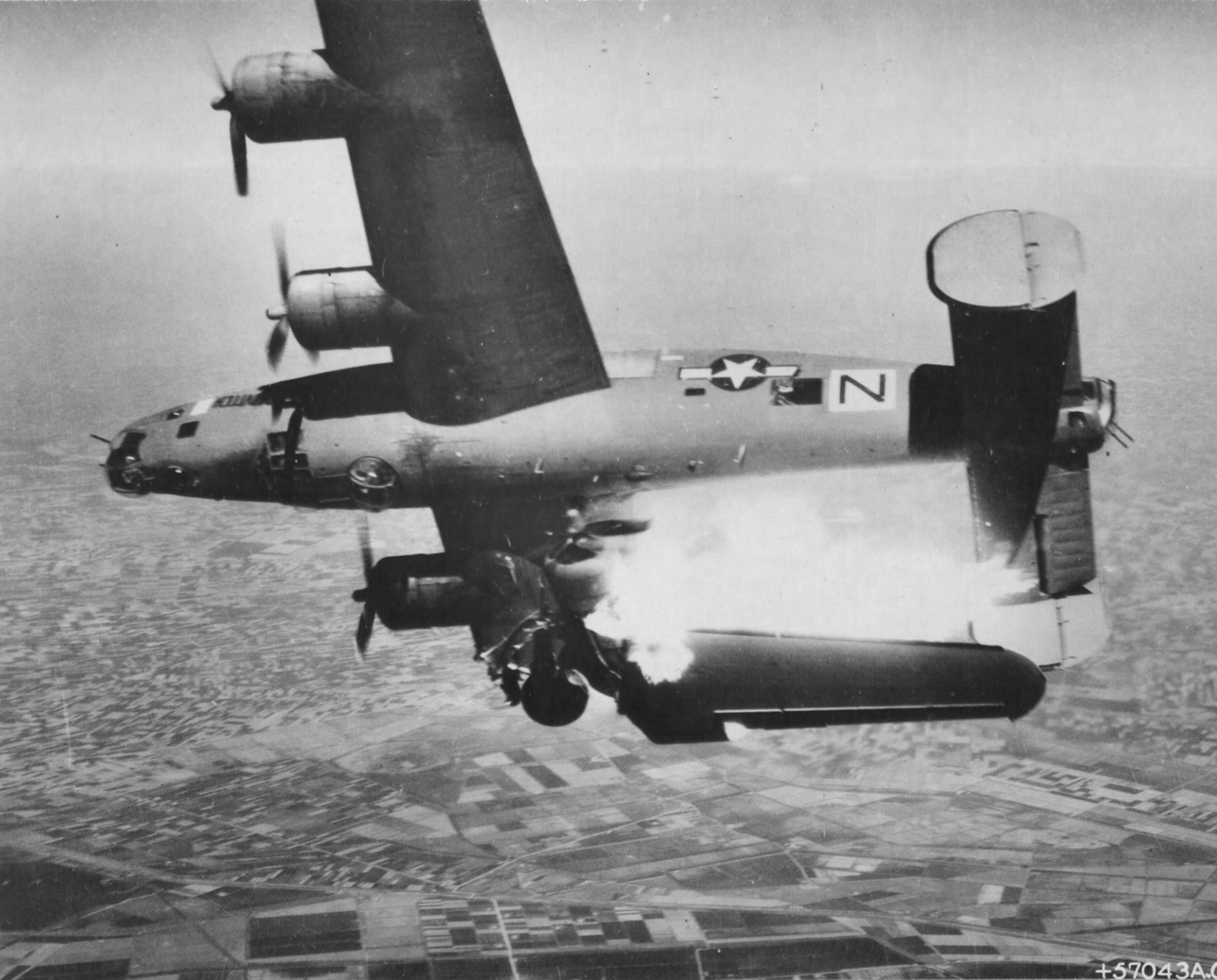
An aircraft plummeting toward earth gives few crewmen real opportunity to escape the plane and hit the silk.  Waist gunners have the most direct exit available while the others need time to extricate themselves and get to an opening.  Chances are the ball gunner in the belly of the bomber rides the stricken plane down.  Some B-24s had an escape hatch above the pilot and copilot on the flight deck - others didn't.  Thousands of airmen had only time enough to come to terms with imminent death in whatever manner overcame them.  
Picture:  600 x 505 at 300 dpi - Wikipedia  


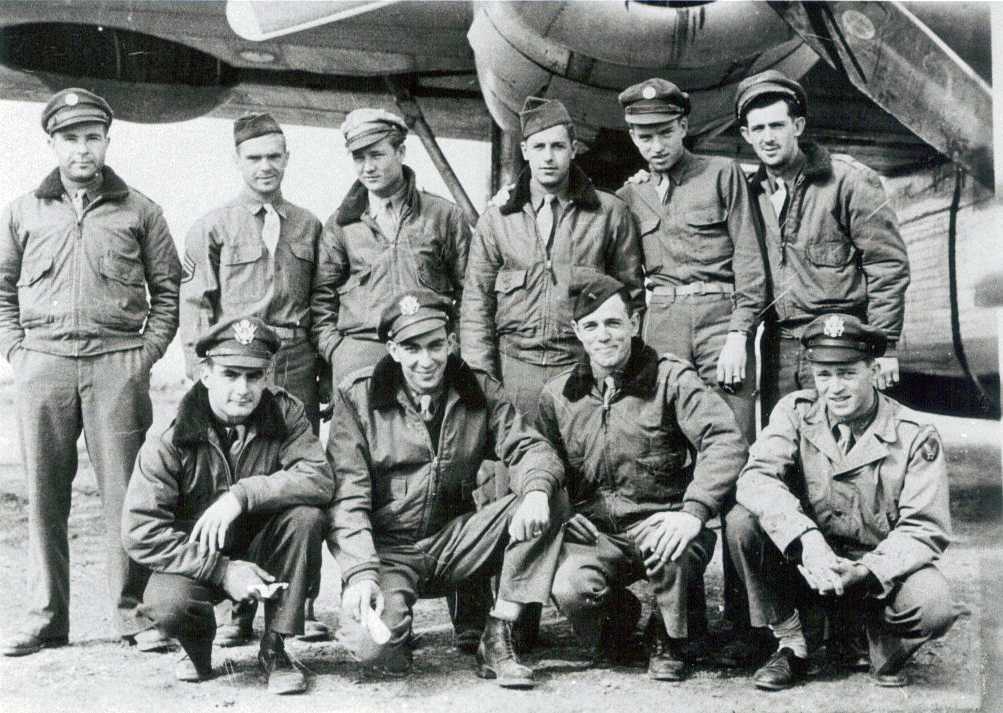
Consider yourself dead.  Some of you won't come back from this.  Some of you will, but you'll be the lucky ones - Briefing Officer.  As a member of the Eighth Air Force in World War II you were required to complete 25 missions and the odds weren't good.  
Picture:  1003 x 713 at 96 dpi - Yellow Airplane


Some said it looked like the packing box the B-17 was shipped in.  The B-24 was cold, it jostled you about and working the controls to keep it steady quickly wore you out so that the pilot and copilot traded off flying the plane.  It was not loved.  The B-24 simply did more of the work of war than any other bomber of World War II.  It was a grunt and didn't march smartly.
Picture:  1280 x 919 - World War II Database      


Thursday, January 12, 2012

B-29

B-29 Superfortress
Boeing
C L I C K     T O     E N L A R G E


We know the expression that necessity is the mother of invention.  Early on the American military realized they'd need a bomber far surpassing anything currently in existence if they were to reach Japan in a campaign of strategic bombing.  The same held true for Germany if Britain was lost as a potential American base in Europe.  Topping 3 billion dollars the weapon system that became the B-29 was the most expensive development project of the war - even surpassing the Manhattan Project to produce an atomic bomb.  
Picture:  1024 x 768 at 300 dpi - Scenic Reflections


Crew:                    11

Power:                  4 - Wright 2200 hp R-3350-57 radial engines

Max. Speed:        576 kph / 358 mph
Ceiling:                 9695 m / 31,800 ft
Range:                  5229 km / 3250 miles
Climb:                   7625 m / 25,000 ft in 43 minutes

Weight -
Empty:                  31,843 kg / 70,140 lb
Max. Take Off:     56,296 kg / 124,000 lb

Size - 
Wingspan:           43.05 m / 141 ft 3 in
Wing Area:          161.27 sq m / 1736 sq ft
Length:                 30.18 m / 99 ft
Height:                 9.01 m / 29 ft 7 in

Armament:
                             4 - gun turret over nose
                             2 - gun turret under nose, over and under rear fuselage
                                  all 12.7 mm / 0.5 in caliber
                             1 - 20 mm / 0.78 in cannon and 
                             2 - 12.7 mm / 0.5 in guns in tail
                             9080 kg / 20,000 lb bomb load


High altitude bombing of industry in Japan yielded poor results as factors, such as the jet stream, left destruction wide of their target.  It may not have mattered all that much as Navy submarines were increasingly choking off Japan from vital resources.  The decision was made to target civilian morale and B-29s based in the Marianas methodically fire bombed Japan's major cities.  The strategy became one of political coercion.  
Picture:  475 x 594 at 200 dpi - 307th Bombardment Group


Initial Strategic Air Command


Mobilizing large scale research and development along with utilizing enormous industrial capacity brought about the atom bomb and the means to deliver it.  Its use dramatized the futility of continued resistance and Japan's leaders acceded to unconditional surrender despite having not yet suffered invasion and still maintaining two million armed troops on the home front.  This weapons system would launch America's strategic air arm in the coming confrontation with the Soviet Union.  Stalin matched the challenge, creating the Tu-4 - a B-29 clone, and detonating an atomic bomb in 1949.  If ever there was a misapprehension that the wartime alliance was anything other than a marriage of convenience it was quickly dispelled.  
Picture:  1809 x 1192 - Wikipedia         


B-29 Crew

The B-29's wings had to provide lift for enormous weight.  Air speed had to compensate for any shortfall in wing design.  The bomber's four powerful engines pushed available technology to the limit resulting in frequent powerplant fires.  There was enormous pressure to deploy this revolutionary aircraft even as the bugs in engineering were worked out.  This made flying over long stretches of ocean and combat missions over Japan even more nerve wracking.  Taking Iwo Jima in February, 1945 enabled many hundreds of B-29s to make emergency landings on its airstrip during the remaining months of the war.  
Picture:  2844 x 1731 - Reunions Magazine


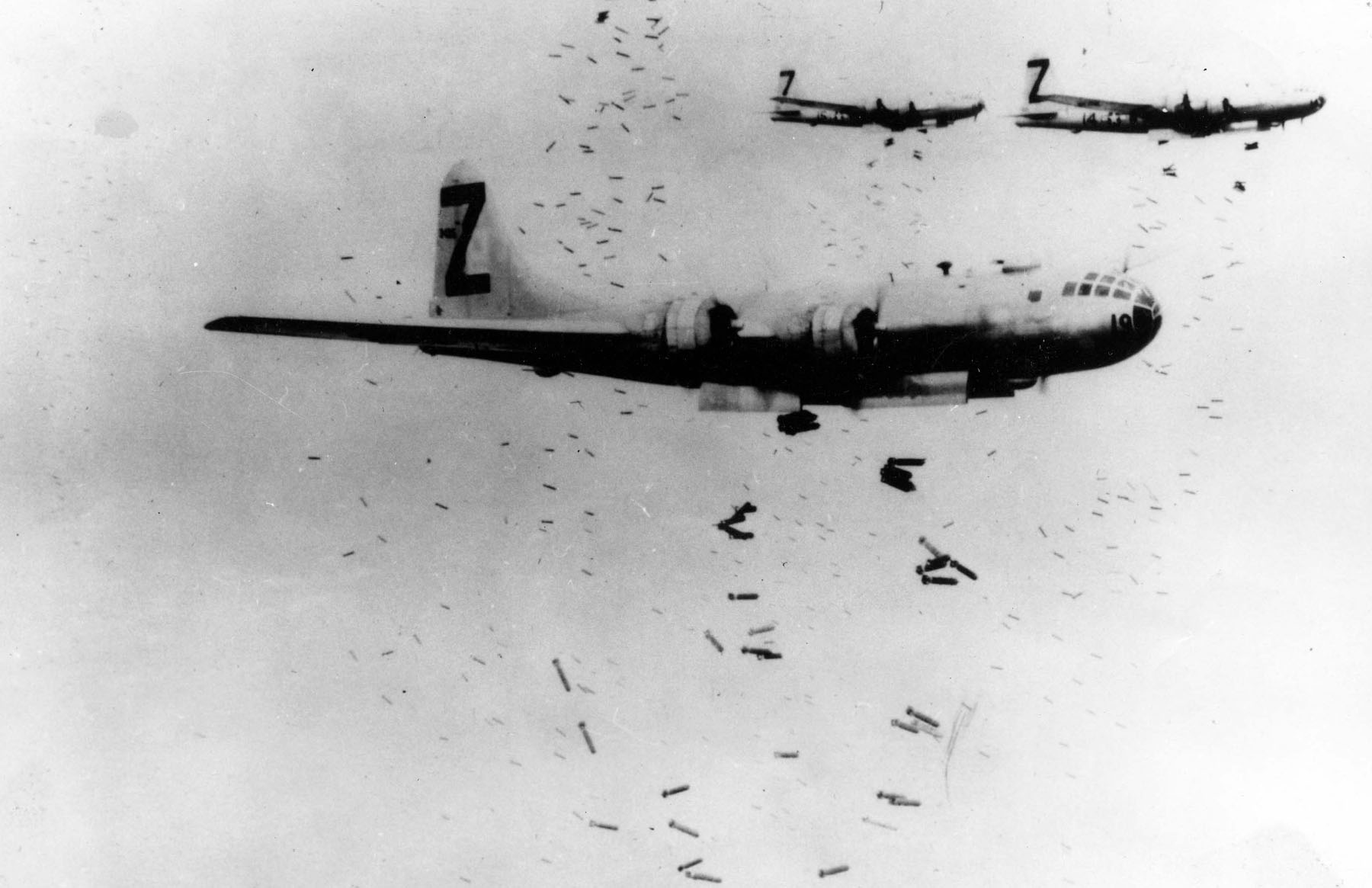
Incendiary Raid


Using M-69 napalm incendiary bombs over Tokyo on March 9, 1945 resulted in a greater number of deaths than the atomic explosion over Hiroshima five months later.  Wars create unintended consequences.  The rationale behind total war is that Hell on Earth now is meant to shorten the on-going nightmare... actually saving many lives.  Family loving people were required to make such decisions in World War II.
Picture:  1800 x 1165 at 300 dpi - Wikipedia       


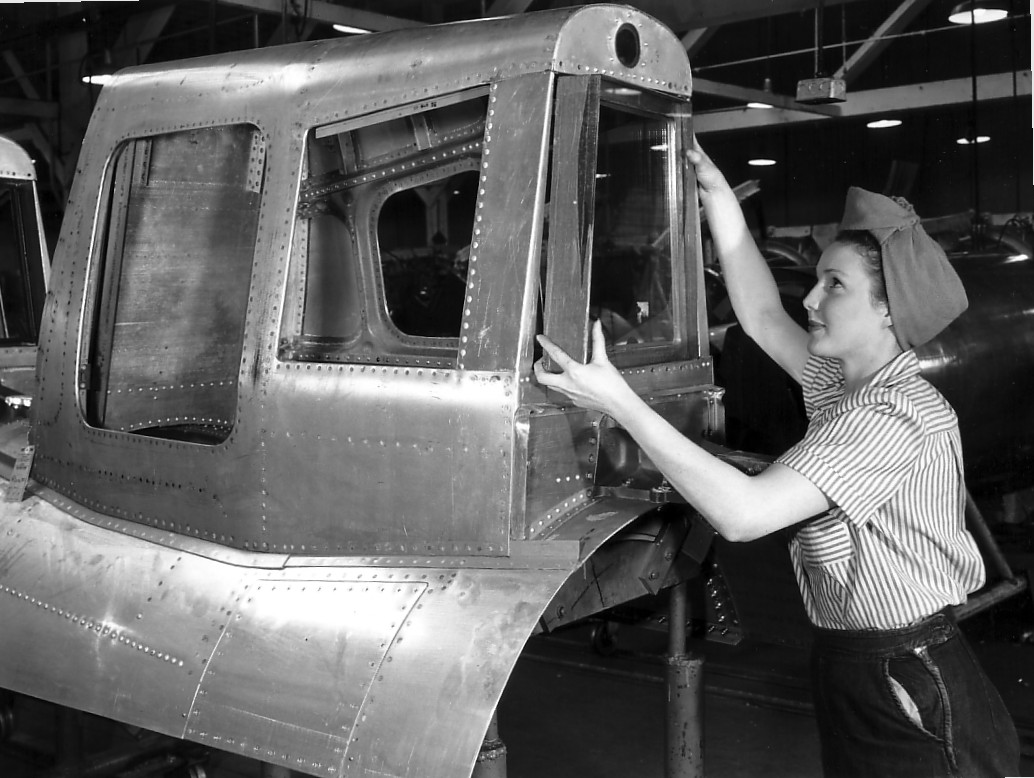
Assembly


At war's end more than 2,000 B-29s had been produced.  Immediately shutting down production would have put many people out of work so over a thousand additional aircraft were manufactured before work was halted in May, 1946.  Like a fast moving freight train the cost of war does not stop on a dime.  There is a momentum that will not be denied by the simple signing of a peace treaty.
Picture:  1034 x 778 at 100 dpi - Wreck Chasing


Projecting Power


Pressurized crew quarters, remote control gun turrets, and a rudimentary radar system used for ground targeting set the B-29 apart from other warbirds of its time.  But it was the concept of building an aircraft for the sole purpose of destroying strategic targets from high altitudes and thousands of miles away that would most influence aircraft design until missile technology came of age.  The weapons of mass destruction still exist but the fear of their use is nowhere near the level it was during the Cold War.  They will remain with us because, on a national level, goodwill comes up short of self interest.
Picture:  2792 x 2180 - World War II Database 

Related Topics:


W O R L D    W A R    I I    P L A N E S


Tuesday, January 10, 2012

Tu-22

Tu-22M  Backfire
Tupolev
C L I C K     T O     E N L A R G E


The Tu-22M is not a modified Tu-22 Blinder but a separately designed aircraft from the older Tu-22 of the 1950s.  The two most noticeable differences are that the Tu-22M has variable geometry wings and its engines are within the fuselage as opposed to being grouped above it by the tail.  The newer Tu-22M became operational in 1976 and remains to this day Russia's premiere bomber.
Picture:  1000 x 709 - Ramapo College

Tu-22M3
Crew:                    3 - Pilot, Navigator, Radio Operator/Gunner

Power:                  2 - KKBM Kuznetsov 25,051 kg / 55,137 lb thrust 
                                    NK-2512MV turbofans

Max. Speed:       2000 kph / 1242 mph
Ceiling:                13,226 m / 43,394 ft
Radius:                4000 km / 2485 miles
Climb:                  Not Available

Weight -
Empty:                54,000 kg / 118,854 lb
Max. Take Off:   124,000 kg / 272,924 lb

Size -
Wingspan:          34.28 m / 112 ft 6 in, spread
                             23.3 m / 76 ft 6 in, swept
Wing Area:         175.8 sq m / 1892.4 sq ft
Length:                42.46 m / 139 ft 4 in
Height:                11.05 m / 36 ft

Armament:
                            1 - 23 mm / 0.9 in cannon in tail
                            24,000 kg / 52,824 lb conventional munitions in bomb bay or
                            3 - Kh-22 missiles or 
                            10 - Kh-15 missiles


The Tu-22M is a medium range bomber having one of two primary missions during the Cold War - strike strategic targets on the European and Asian continents and the maritime version targeting NATO carrier battle groups with anti-ship missiles.  An important ongoing role of the Tu-22M is reconnaissance.  The Backfire found limited use over Afghanistan and later Chechnya in 1995.   
Picture:  1024 x 768 - Mi 9


Every weapon system advance begins work on an appropriate response which then becomes the basis for designing an effective counter-measure.  The stakes are continually raised and the strategic arms race of the Cold War became one of attempting to stay even.  Jet interceptors begat high altitude supersonic bombers begat surface to air missiles begat stand-off missiles begat long range over the horizon air to air missiles and so on.  
Picture:  1024 x 768 - Flash Screen


The engineers of the early jet age were finding their way and the pilots of the time took the risk.  Like the American B-47 the Tu-22 Blinder was a difficult plane to fly and inexperience dealing with quirky handling could have lethal consequences.  Tupolev's experience with the Tu-22 led to development of the vastly improved Tu-22M3.  Still, large high performance intermediate bombers are increasingly viewed as expensive relics.
Picture:  2400 x 1800 at 180 dpi - CGI Dimension


As a strategic weapon the Tu-22M is primarily a platform for air launched cruise missiles such as the Kh-22 as well as short range attack missiles like the Kh-15.  The Backfire continues to do the heavy lifting for the combat wing of Russian aviation as well as provide reconnaissance and electronic counter measure capability.
Picture:  1280 x 719 at 100 dpi - Reddit