
S P E E D W A Y
love
dad

"Operated on this morning. Diagnosis not yet complete
but results seem satisfactory and already exceed
expectations."
Translation: atomic bomb successfully exploded.
Truman received this message while he was
conferring with Stalin in Potsdam, an upscale
community just outside Berlin. He hoped possession
of this bomb would strengthen America's negotiating
position with the Soviets. Stalin dismissed this news
with a casual 'thank you'. Ever the poker face,
the Kremlin leader was not about to reveal his concerns.

The British were victorious over Hitler's Germany
and yet this war would also bring an end to the
British Empire. The government was bankrupt and
England's colonies were unraveling into independent
nations. Meanwhile, a new world order was developing
under the watchful eyes of two global titans -
the United States and the Soviet Union.

Clement Attlee defeated Winston Churchill in an
election stunner that occurred just before Potsdam.
Voters wanted a better life. They wanted better
wages, decent homes and public health care.
Winston didn't see it. He was no longer the right man
for the times.
Grand global strategy would have to wait.

Potsdam revealed the breaking up of the Allies.
The goals of East and West were no longer in alliance.
The Soviets needed to consolidate their conquests
in Eastern Europe while America wanted to return
Germany to its role as Europe's economic dynamo.
Their differences were irreconcilable.
Tempers were strained.
It was going to be anything goes.
Short of war. Nothing was worth the suffering
it created. People everywhere were burdened
with memories fresh from the war.
Two world wars in one century were enough.

Europe's Age of Imperialism lasted four hundred years,
from the 15th through the 19th century. Adventurers
roamed the seas in wooden ships, seizing treasure
and claiming newly discovered lands as property
of their royal benefactor. Native inhabitants of these
lands were conquered people and should count
themselves lucky to be alive.
Colonies are subordinate to the home government.
Colonial rules benefit those of the home land.
Native inhabitants should once again be reminded -
they are lucky to be alive.
.

Empire is a form of governance.
One nation controls other nations, either
wholly or partially, all the time or usually.
The empire may rule through coercion -
the threat of force, or by inducements -
financial success. Even inspiration can be
the foundation of an empire. Democracy in
America. Marxism in Russia.
Empires need not be limited to Napoleon.
* * * * *


OVER EASY

A political career of consequence in early
20th Century England began with a path
that led through either Cambridge or Oxford.
However, Winston was an indifferent student and
his parents felt it wise to send young Churchill
to Sandhurst, Britain's West Point.
It was here he found something of interest.
His education took hold.

Winston was mostly ignored by his parents,
the politically prominent Lord Randolph and his
American wife, Lady Randolph. They were each
wrapped up in a whirlwind of self-importance
and could find little time for their dull boy, Winston.
He was someone easy to forget.

Churchill Elected to Parliament.
Mark it on your calendar. 1904.
The Conservatives had a rising star among
their new members in Parliament - the MPs.
Churchill was both a popular writer and
a celebrated hero of the Boer War.
He also had the attitude of an ambitious,
self-absorbed young man. His friendships
mostly had some underlying motive.
People felt used.

This young man wasn't afraid to lose.
It didn't take long before Churchill
picked a fight with his leadership
over party policy. He wasn't about to be
anyone's silent, attentive junior member.
Continued disputes and insubordination would
inevitably lead to Winston switching from
the Conservative to the Liberal Party.
Churchill fought for measures that would raise
people's quality of life beyond that of someone
living in a Charles Dickens novel.
Political accusations flew. Winston was an enemy
to his class. Dinner invitations from friends
dried up.
Controversy was such a hassle.

The Great War ground up lives daily at a sickening rate.
As Lord of the Admiralty, Churchill proposed a plan
he believed would shorten the war. His idea to
attack Turkey at Gallipoli was bold, brilliant and
a disaster.
Gallipoli was a humiliating military defeat.
Churchill was handed the blame.
His star dropped below the horizon.
He was put out to pasture.
Depression set in.
This is where most political careers end.
Promising talent fades before making history.
This wasn't Winston's story.
There was too much he had yet to do.
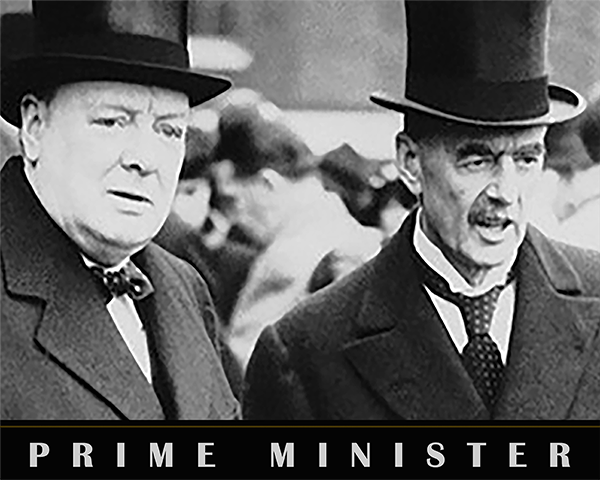
Churchill saw himself as a man of destiny.
He felt himself born to make a difference.
Winston must be at the center of action.
He was too brilliant to be anywhere else.
He would settle for nothing less than
being leader of a great cause.
World War Two would give Winston his chance.
* * * * *


OVER EASY

Life in the land of plenty.
Large breasted Mom models a lampshade hat,
perfect for lounging poolside. The TV plays.
A canned ham waits on the coffee table.
The cover of a romance comic is framed on the wall.
Suddenly Dad enters after his swim at Muscle Beach.
Refreshed, he is now ready to pump iron using
his Tootsie Pop.
Just another day in Paradise.

Stories.
Mass produced.
Make good money.
We teach you to draw.
Lichtenstein spent years painting
his own versions of comic book panels.
Why would a talented artist invest himself
in pursuit of the mundane?
It isn't kitsch to him.
It is an obsession.
Something too rich to be left undiscovered
lies beneath the blandly overdone.

Why paint a flag?
Because it is not a flag. It's a painting.
Stripes become bands of textured color.
The image is red, white and blue.
Hidden amidst the obvious, though,
the artist's expression mingles in the
application of paint. Obscure.
How does it look above the sofa?

Celebrity.
American Geisha.
Icon.
An inside joke.
What does this have to do with Marilyn?
Museum-grade Camp.
Something Three Stooges
by William Shakespeare.
Striking image.

Bold sweeps of the painter's brush
replaces the plodding pace of
the meticulous monk.
The painting is Easter Morning.
Resurrection.
Another title might be
Woman with Dentured Smile.

Film Noire.
No heroics.
Just nights wandering derelict paths of town,
frequenting theaters that smell of bleach.
Guys keeping to themselves.
It helps that they're made of plaster.

Any imagery here was happenstance.
It was the sensual nature of paint that ruled...
dripping from the end of a stick.
Pollock did it. Now it was done.
What more could you do with drizzling paint?
It had all the functionality of a unicycle.
Pollock moved on.

Here's an upbeat mural for a spaceport.
Leger added boogie-woogie colors to cubism.
Dreary analytics became suddenly upbeat.
A happy notion amidst the gloom.

A moment too late. How annoying.
Now it's memorialized in oils.
It has pleasant desert colors with
something missing for subject matter.
The painting would dominate most any room
where it was hung.

Puzzled.
No clue as to what this is all about.
Haven't the time to find out, either.
* * * * *


OVER EASY

Mom wanted him to enter the priesthood but
the Josef that entered the seminary had already
decided it was Karl Marx that showed him the
way of the world.

By the time of Lenin's death in 1923, it was apparent
Stalin had fundamental differences with the founder of
the Soviet Union. Lenin increasingly chose practical
solutions to his country's economic problems, setting
aside his communist teachings.
Stalin was a True Believer.
Lenin's measures led the Soviet state away from
the teachings of Marxism. Fortunately, death stepped in.

Industrialization was Stalin's top priority once he
took power. His program rocketed the Soviet Union
from fifteenth most industrialized nation to being
second only to the United States.
Stalin directed his same brutal urgency towards
his country's farming. Families lost their farms
and they were sent to large government farms
called Collectives. Crop yields dropped drastically.
Millions lost their lives in the famine that spread
across the land.
Stalin got his way, though.
You don't disappoint Stalin.

Everyone must fear you.
First rule of Rule.
Trust no one.
Paranoia comes with being leader.
Stalin did not tolerate opposition.
Millions of everyday people of the Soviet Union were
sent off to the Gulag, labor camps in the Arctic zone.
An untold number of these people were executed.
Don't do anything that could be construed as disloyal.
Do what you're told no matter how stupid it seems.
Keep your head down.
Stalin ruled by terror.

Stalin and Hitler despised one another.
But hatred did not stand in the way of their
making a deal.
The Molotov-Ribbentrop Pact of 1939
assured Hitler he would be taking on France
and Britain only. There would be no two front war.
Russia promised to remain on the sidelines.
This arrangement with Hitler bought Stalin the time
he would need to prepare his army to fight the
Wehrmacht in a war both sides knew would come.

By 1947 Truman wasn't tolerating Stalin.
The Kremlin controlled all of Eastern Europe
and, still, the Soviets were probing about
for weakness in the West.
Iran, Turkey, Greece.
Truman was forced to respond.
First came the Truman Doctrine which laid out
a plan to contain Soviet Expansion.
Then the Marshall Plan was introduced
in order to revitalize the European economy.
Finally, the United States promised to defend
Western Europe from attack through NATO,
the North Atlantic Treaty Organization.
Stalin's probing would continue with a war
in Korea and a blockade of Berlin.
Every global argument became us versus them.
The Cold War was underway.
* * * * *


OVER EASY


