Focke-Wulf
C L I C K T O E N L A R G E

The Fw 190 was designed not only to be a high performance aircraft but also relatively simple to operate and easy to maintain in field conditions. It proved a versatile design and it became one of the war's best fighters and well as an excellent ground attack airplane.
Picture: 1024 x 768 - Patrick's Aviation
Fw 190D-9
Crew: 1
Power: Junkers 1776 hp Jumo 213A-1 inverted V piston engine
Performance -
Max. Speed: 685 kph / 426 mph
Ceiling: 12,000 m / 39,370 ft
Range: 835 km / 519 miles
Climb: 6000 m / 19,685 ft in 7 minutes
Weight -
Empty: 3490 kg / 7694 lb
Max. Take-off: 4848 kg / 10,670 lb
Size -
Wingspan: 10.5 m / 34 ft 5.5 in
Wing Area: 18.3 sq m / 197 sq ft
Length: 10.2 m / 33 ft 5.5 in
Height: 3.35 m / 11 ft
Armament:
2 x 13 mm / 0.51 in machine-guns
2 x 20 mm / 0.79 in cannon
1 x 500 kg / 1102 lb bomb
Lead Designer: Kurt Tank


The Focke-Wulf addressed one of the weaknesses of the Messerschmidt Bf 109 by having the landing gear spread apart and retracting inward. The narrow undercarriage of the Messerschmidt caused numerous mishaps during take off and landing on often rough airfields.
Picture: 2764 x 2131 - 55 Bomber


Most Fw 190s were powered with a BMW radial engine that provided great performance up to about 20,000 feet or just over 9,000 meters. As the war progressed it became apparent Germany would need a high altitude interceptor and Focke-Wulf turned to a conventional inline piston engine. This became the long nose D series, known as the Dora 9. It anticipated the eventual arrival of the Boeing B-29, but in the mean time, it outperformed the best of the Allied fighters. Germany never could produce equipment in numbers needed to stem the Allied advance and, as it turns out, many new Fw 190s sat idle at airfields because of shortages in fuel. Fuel scarcity led to the needless deaths of many German pilots, fed into the war machine with minimal flight time under their belt and very abbreviated training.
Picture - radial: 960 x 500 - With Friendship
Picture - inline: 960 x 500 - Clavework Graphics

The designer Kurt Tank wanted an air cooled radial engine because they were more rugged than inline engines and they were less vulnerable to battle damage, as well. He knew the importance of a pilot having a good, all around view so he came up with the frameless bubble canopy. Good handling called for large control surfaces for the elevators and ailerons. Most planes use wire to manage flight controls but it stretches with use over time, making handling less precise. Kurt Tank replaced wire with rigid rods in the Fw 190. He engineered the aircraft knowing what pilots needed as well as the reality of combat conditions and he produced an aviation classic.
Picture: 992 x 576 - RC Groups
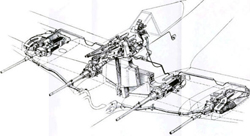
There were problems with the initial Fw 190. The air cooled engine tended to overheat and occasionally catch fire. For a time pilots were forbidden to fly over water any great distance from shore because of this problem. Another issue was the Focke-Wulf 190 was too lightly armed for successful dogfights. Later as the plane took on a ground attack role a significant amount of weight needed to be added to protect the pilot and critical areas with armor. A couple of the 20 mm cannon were removed from the wings in an attempt to compensate for the added weight. Modifications to the aircraft to address one issue would often result in having to make changes elsewhere to maintain balance in the plane's overall performance.
Picture: 618 x 321 at 300 dpi - Dark History

During the long Red Army offensive of 1944 Fw 190 pilots found themselves flying up to eight sorties a day on the Eastern Front attempting to stem the tide of advancing enemy armor. If Soviet forces were rushing forward unopposed then German pilots would concentrate their machine gun and cannon fire on soft skinned supply vehicles. Without continuous replenishment they knew Russian tanks wouldn't get far. If, on the other hand, the enemy was engaged in combat with friendly ground forces then pilots would need to single out opposing tanks, flying dangerously close to the ground, then dropping their bomb as they flew directly over the targeted armored vehicle. The bombs had a one second delay on their fuse to prevent the blast from throwing the pilot and his craft into the ground. Piloting your country's best plane meant you were expected to ride the thinnest margin for error. The pilots created maximum havoc and, in turn, absorbed serious losses.
Picture: 1800 x 188 at 300 dpi - Natl. Museum U.S. Air Force


