Showing posts with label Rembrandt. Show all posts

Monday, February 25, 2013

Portraits of the Inner Life


artist:  Edouard Manet

Engrossed with the mind’s inner life, images form from memory and are colored by the richness of emotion.  Here visual perception serves no purpose, contributing only distraction from one’s true, compelling thoughts.  The eyes become locked, absent of duty, and parked in unfocused gaze into idle space.  Ears, equally inattentive, fall deaf to intelligible sound.  A remembered moment is played, reset and played again.  The woman is fixed, lost in a wistful presence, oblivious to a hundred boisterous voices mixed with the occasional laughter raised to the level of an animal call sweeping through a jungle gloom.

A Bar at the Folies - Bergeres  1882


artist:  Rembrandt van Rijn

What can we make of the introspection displayed in Rembrandt’s portrait of this older man dressed in his finery?  Once again the gaze into indeterminate space is evidence that the image viewed is one that lies behind the eyes, playing out in some illuminated recess of the mind.  What is revealed by the arch of the left brow and slight upturn to the corner of the mouth?  Upon further conjecture does he feel he is now witness to a discovery of some satisfaction?  Does the grip of the right hand give proof of new resolve?  Has he cinched a tactical victory in business, politics or love by seeing the future three moves ahead?  The artist says it doesn’t matter the specific nature of his subject’s thoughts so long as you understand this man approaches life as he would were he playing a game of chess.  He’s confident, used to having the upper hand.

Portrait of Jan Six  1654


artist:  Edgar Degas

Slumped, round shouldered in her proud, new attire, she contemplates loss.  Her drink as forgotten as is she herself.  Downcast eyes fixed possibly on dust gathered along the edges of a scuffed floor.  It little matters.  The mind savors the irony of an earlier hour, light with joyous expectation.  Now she waits out her sentence.  Her suitor has flown.


L'absinthe  1876


Tuesday, March 27, 2012

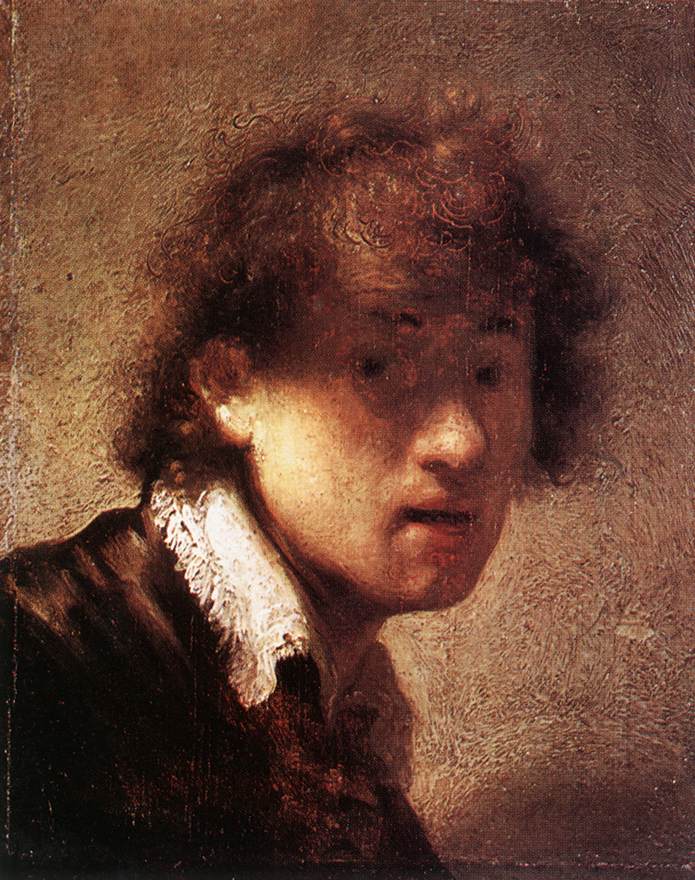
Rembrandt Self Portraits

Rembrandt van Rijn
1606  -  1669
Self Portraits
C L I C K     T O     E N L A R G E

1629
Oil on Panel
15.5 x 12.5 cm
Alte Pinakothek, Munich
Picture:  695 x 880 at 300 dpi  -  SUNY

Rembrandt is discovered in 1629 by an influential statesman who procures for him an important commission from the court of The Hague.  


Saskia
Picture:  746 x 1000  -  artMight

1634
71 x 55 cm
Private Collection
Picture:  371 x 480 at 305 dpi  -  Wikipaintings

Rembrandt marries Saskia van Uylenburg, cousin to his art dealer.  He is married in the local church without the presence of his relatives.  During this year he also becomes a burgess of Amsterdam, a member of the local guild of painters and he acquires a number of students.


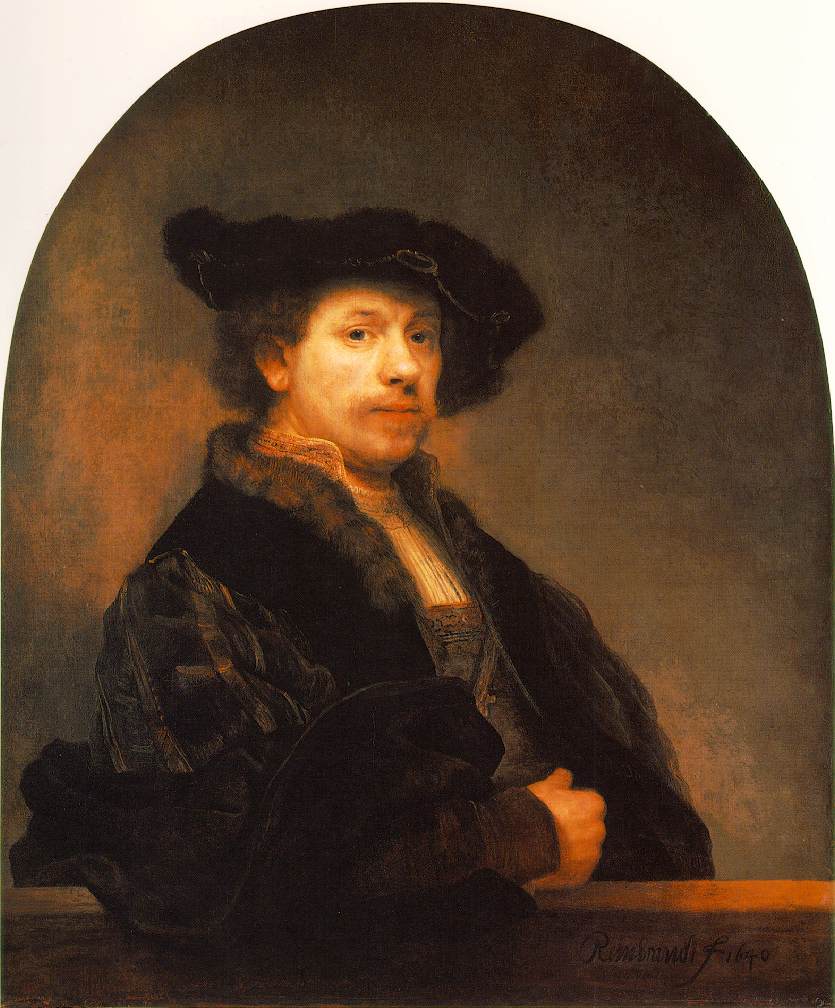
1640
102 x 80 cm
National Gallery, London
Picture:  835 x 1008 at 300 dpi  -  Ibiblio

Rembrandt's second daughter, Cornelia, is born but dies after one month.  Only Titus, the youngest of his four children, survives to adulthood.  Saskia dies in 1642, shortly after giving birth to Titus.  She is believed to have had tuberculosis.


1643
72 x 55 cm
Museo Thyssen-Bornemisza, Madrid
Picture:  600 x 785 at 150 dpi  -  Rembrandt Painting

Saskia dies the previous year and Rembrandt's clients begin to dwindle.  He has a relationship with his late wife's nurse that ends unhappily.  She pawns Saskia's jewelry that he had given her.


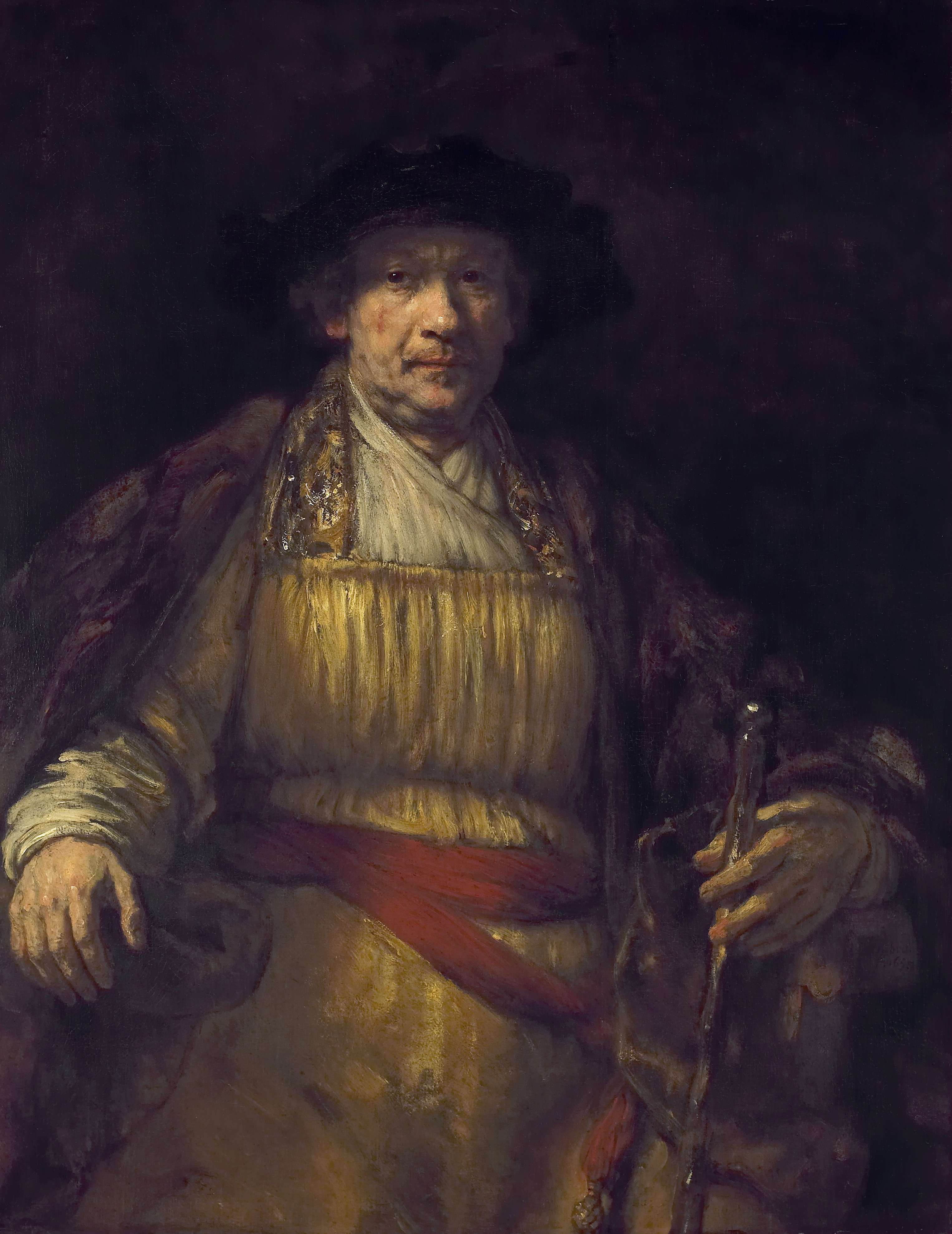
1658
134 x 104 cm
Frick Collection, New York
Picture:  3054 x 3957  -  Wikipedia

Rembrandt lives beyond his means and is forced to sell his possessions to avoid bankruptcy.


1659
85 x 66 cm
National Gallery of Art, Washington
Picture:  1940 x 2472 at 300 dpi  -  Wikipedia

Despite selling off his possessions the artist still finds himself oppressed with bills and personal tragedy.


1660
111 x 85 cm
Musee du Louvre, Paris
Picture:  700 x 930  -  Brown University

Rembrandt sells his house and his printing press and moves into something less expensive. 


1661
114 x 94 cm
Iveagh Bequest, Kenwood House, London
Picture:  851 x 1012 at 300 dpi  -  Wikipedia

Rembrandt is contracted to complete a work for the new city hall but the finished piece is rejected and returned to the artist.


1669
86 x 70.5 cm
National Gallery, London
Picture:  828 x 1024  -  Wikipedia

The portrait as autobiography was established and defined by Rembrandt.  What began as an exercise in depicting facial expression and role-playing became a chronicle of one's life as it was being lived.