Showing posts with label SAC. Show all posts

Monday, December 19, 2011

B-47

B-47 Stratojet


Boeing


B-47 Stratojet


The B-47 was the first American all jet bomber.  German wartime research contributed to the swept wing design of both the F-86 Sabre and this medium range bomber.  It was truly a revolutionary aircraft when first flown in December, 1947 and its experience would heavily influence the design of the legendary B-52 introduced a few short years later.  


B - 47E


Crew:                    3 - Pilot, copilot, navigator-bombardier

Power:                  6 - General Electric 3269 kg / 7200 lb thrust J47-GE-25 turbojets

Max. Speed:         975 kph / 606 mph
Ceiling:                 12,352 m / 40,500 ft plus
Range:                  5794 km / 3600 miles
Climb:                  1326 m / 4350 ft per minute at maximum power

Weight -
Empty:                 36,663 kg / 80,756 lb
Max. Take Off:    89,973 kg / 198,180 lb

Size -
Wingspan:           35.36 m / 116 ft
Wing Area:         132.66 sq m / 1428 sq ft
Length:                33.48 m / 109 ft 10 in
Height:                8.51 m / 27 ft 11 in

Armament:
                          2 - 20 mm / 0.78 in cannon in remote controlled tail turret
                               9080 kg / 20,000 lb max. bomb load


V I D E O


B-47A


The B-47 had limited internal fuel capacity and was not a true intercontinental bomber without IFR (In Flight Refueling).  This capability was added to the B-47B model along with two 1500 gallon drop tanks attached to the wings.  Each wing of 45 bombers was expected to also have 20 KC-135 tankers to extend its range.  The KC-135s had incompatible piston engines making air refueling difficult for the born for speed Stratojet.  


1,500 B-47s deployed in 1956


The Strategic Air Command had 28 B-47 wings by the mid-1950s, not including the over 200 Stratojets used for reconnaissance missions.  The first B-52s began supplanting this force after 1955.  By 1960 the Air Force was phasing out the remaining B-47s with the new B-58 Hustler but numerous other factors including ICBMs and Polaris submarines made the medium range B-47 an expendable weapons system.  


Labeled Diagram


The 35 degree swept back wing was too thin to house landing gear which led to the bicycle arrangement along the center line of the fuselage.  Landings required concentration and could be particularly treacherous in a crosswind.  The B-47 was a demanding aircraft to fly and left pilots worn out after long flights.  
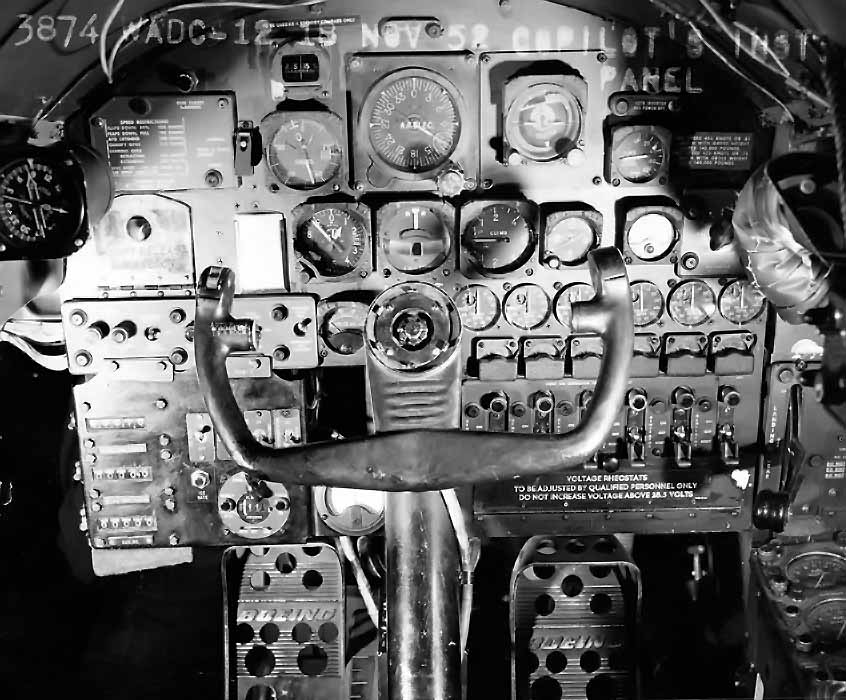


 Copilot Instrument Panel


The B-47 was a challenging plane to fly and tandem seating meant the two pilots could not see what the other was doing thus making crew coordination, rigorous checklist communication, all the more critical.  The large Plexiglas clamshell canopy provided an excellent view but made daylight flying extremely hot unless the navigator, buried in the nose, was left to freeze from air conditioning.  Little thought was given to crew comfort but as an aircraft it had the reputation for handling like a fighter. 
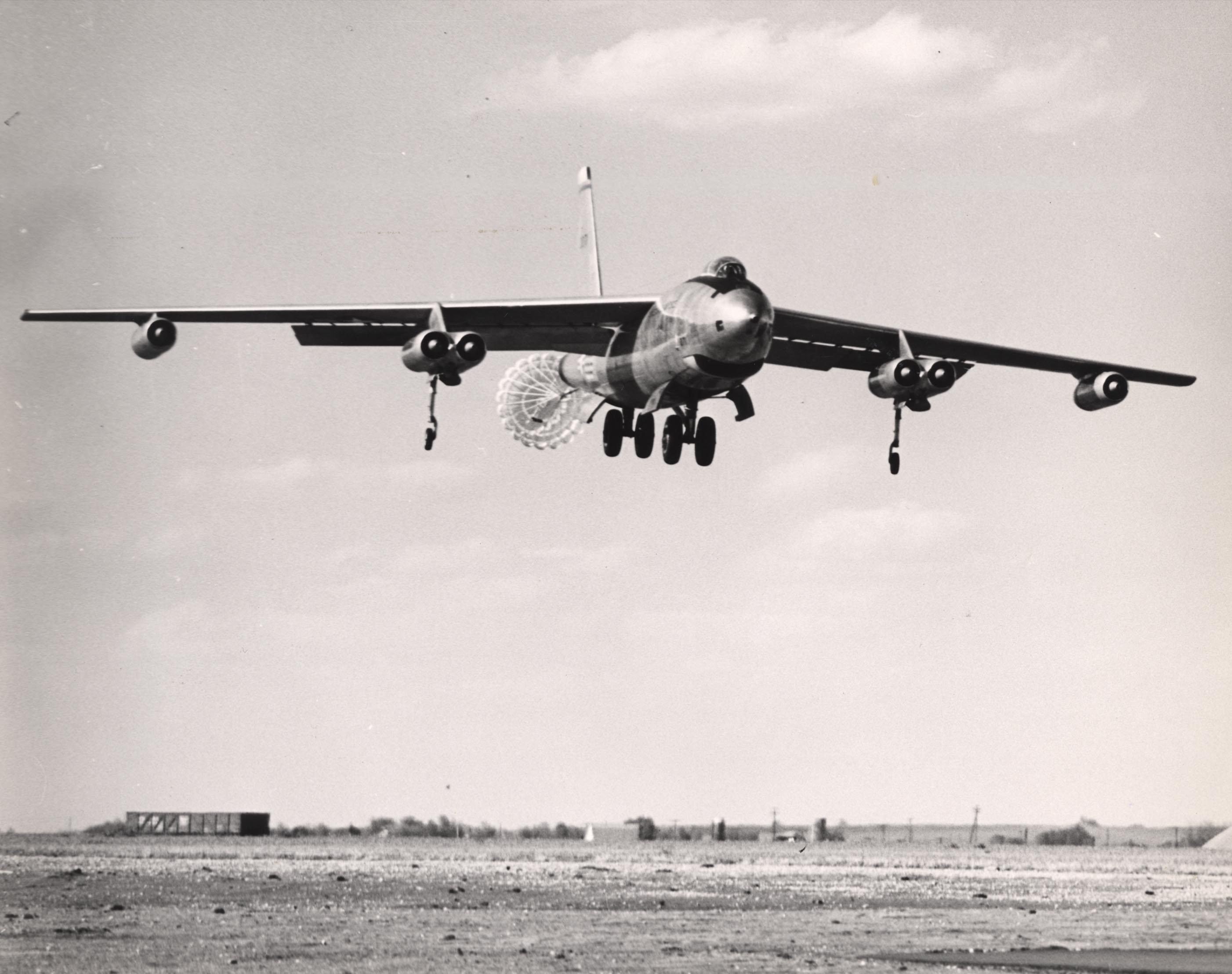


Tail Drag Chute


There were two chutes deployed on landing, an approach chute as seen above and a brake chute once landed.  This landing photo is from Lincoln Air Force Base Museum.
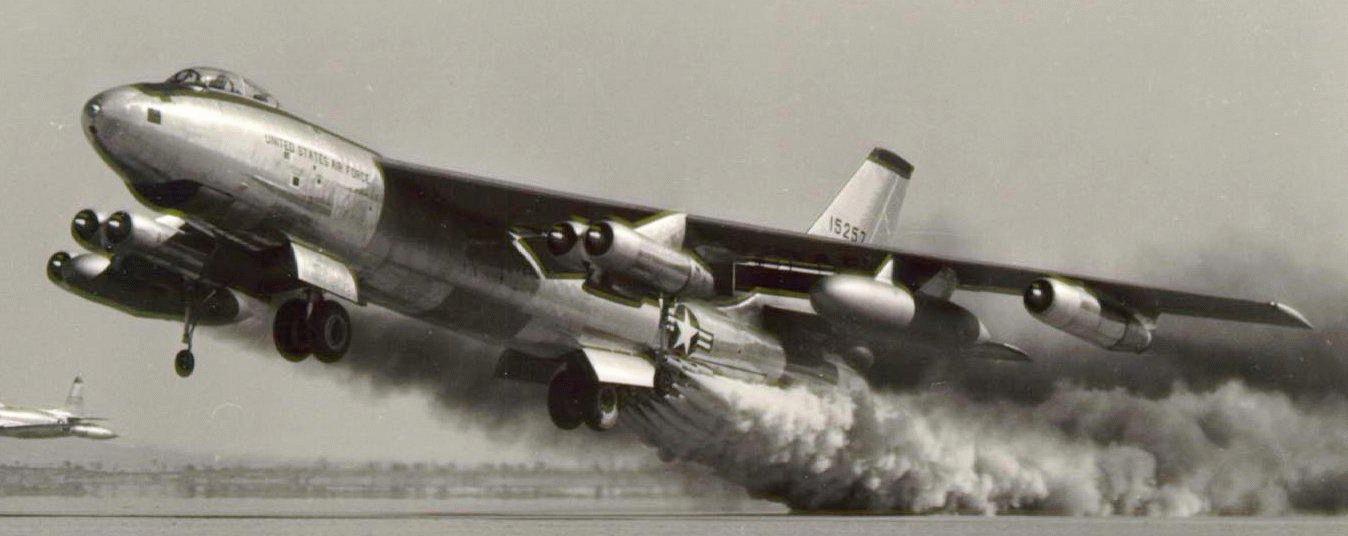


Rocket Assisted Take Off


Engines of the early jet age lacked power output and several were required.  Take offs with heavy payload were assisted by the additional boost of 18 solid fueled rockets located aft of the bomb bay.  Rocket assisted take off and parachute deceleration enabled B-47s to be more diversely stationed at air bases with shorter runways.  The image is at John Weeks.


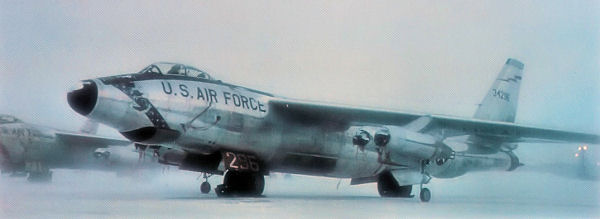
Eielson AFB, Alaska


Range was the primary limitation of the B-47 and many were based in England, Spain, North Africa and Alaska in order to be in striking distance of the Soviet Union.  


B-47 with claimed fighter performance


For the first couple of years following its introduction the B-47 could fly faster and higher than contemporary fighters.  It had an agility in handling unexpected for a bomber.  Its qualities made it the choice for highly dangerous reconnaissance missions into Soviet airspace prior to the U-2 during the early years of the Cold War.  


A V I A T I O N


OVER EASY


Sunday, December 18, 2011

B-36

B-36  Peacemaker


Convair


B-36B


The B-36B was the first production version of the aircraft and did not have the four outboard jet engines and its speed and ceiling suffered accordingly.  These early versions were particularly difficult to maintain and expensive to fly but they were the only SAC (Strategic Air Command) bomber capable of delivering the new hydrogen bomb.  


B - 36J


Crew:                    16

Power:                   6 - Pratt & Whitney 3600 hp R-4360-53 radial piston engines
                              4 - General Electric 2452 kg / 5400 lb thrust J47-19 turbojets

Max. Speed:          661 kph / 411 mph
Ceiling:                  12,169 m / 39,900 ft
Range:                  10,945 km / 6800 miles
Climb:                    677 m / 2220 ft per minute

Weight -
Empty:                  77,650 kg / 171,035 lb
Max. Take Off:     186,140 kg / 410,000 lb

Size -
Wingspan:            70.1 m / 230 ft
Wing Area:           443.32 sq m / 4772 sq ft
Length:                 49.4 m / 162 ft 1 in
Height:                 14.22 m / 46 ft 8 in

Armament:
                           16 - 20 mm / 0.78 in cannon in fuselage tail, nose, turrets
                                  20,884 kg / 46,000 lb max. bomb load


V I D E O


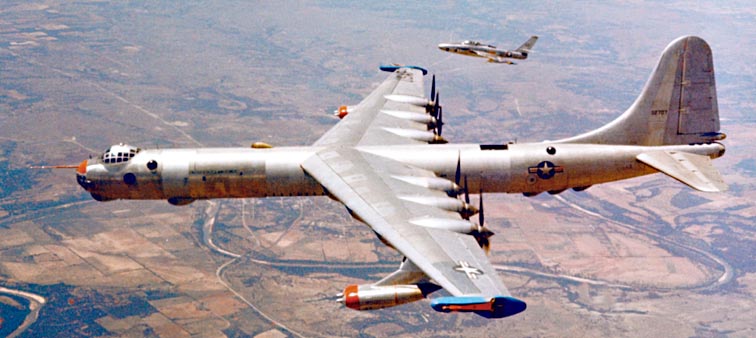
B-36 with Escort


The B-36D was the first model to have the four outboard jet engines.  This aircraft has devices on the ends of its wings that were intended to tow its own escort fighters.  Another idea was to store a fighter underneath within one of its bomb bays.  The idea of a fighter escort was eventually dropped altogether.  The picture is from John Weeks.


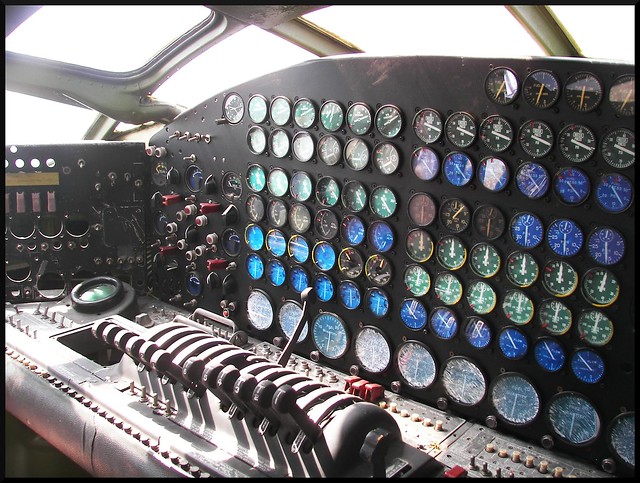
Flight Engineer Panel


With ten engines to monitor there was a lot going on and the B-36 often used two flight engineers to handle the job.  


Forward Cabin


The forward cabin and a rear crew area were pressurized.  A long narrow tube with a powered dolly was used to convey crew members back and forth.  A seven foot high tunnel also existed in the wings enabling crew members to access the propeller engines in flight.  


World War II Design


The B-36 was first commissioned in early 1941 when it was feared Hitler's army would overrun England and the USA would need an aircraft capable of flying from North America to Germany and back on a nonstop bombing run.  Interest in the B-36 waned with the war's end but events leading to the Berlin Airlift renewed the call for an intercontinental bomber.  


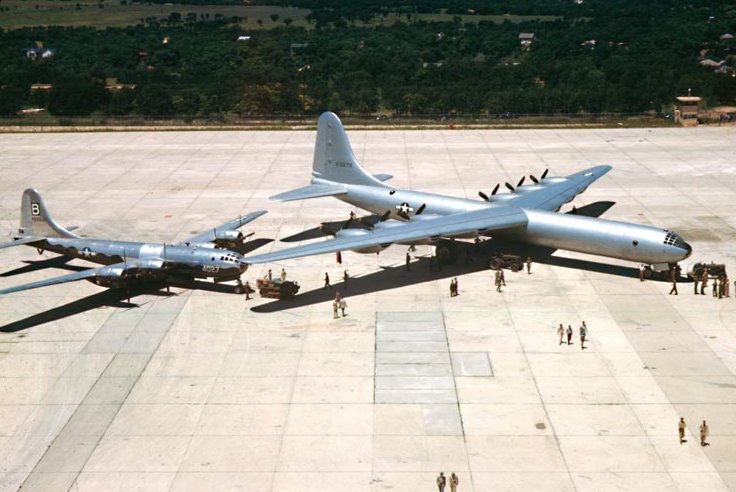
B-29 compared in size with B-36


A striking size comparison between the premiere bomber of World War II and the initial prototype of the B-36.  Note the conventional cockpit of the first design.  


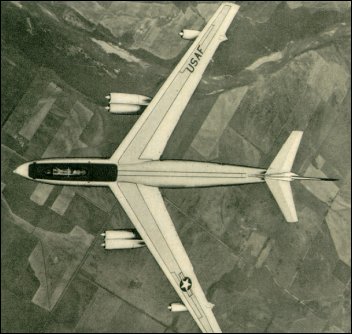
YB-60


Convair put swept wings with jets and a new tail on its B-36 to compete with the B-52 for SAC's need of a jet powered intercontinental bomber.  The YB-60 had severe handling problems among other issues and was never a seriously considered alternative to Boeing's Stratofortress.  


OVER  EASY