Sunday, October 11, 2020

good morning jacob


Washington was a small town around the year 1800.  The government spent much of that year moving from Philadelphia to their new home on the banks of the Potomac.  Members of Congress resided mainly in nearby boardinghouses, ones large enough to serve up to thirty of them sitting elbow to elbow around the dining room table.  Few secrets were kept in a place holding such a gaggle of natural-born schmoozers, rubbing shoulders the live long day, then sheltered together that evening under one communal roof.


Somewhere about the time of Christmas word leaked out of a tie between the two Democrats, seventy-three votes each for Thomas Jefferson and his party's vice-presidential nominee, Aaron Burr.  It was now up to the Federalist-controlled House to determine which of these two leaders they would make chief executive.  Burr made it clear early on he was looking for a deal giving him the presidency.  What a tantalizing scenario this made for Federalists - the two top Democrats, Burr and Jefferson, squabbling over bait set out by their fiercest rivals.  For Burr the stakes were personal - either you grab the brass ring now or kiss that miserable political career of yours gone.


January 9

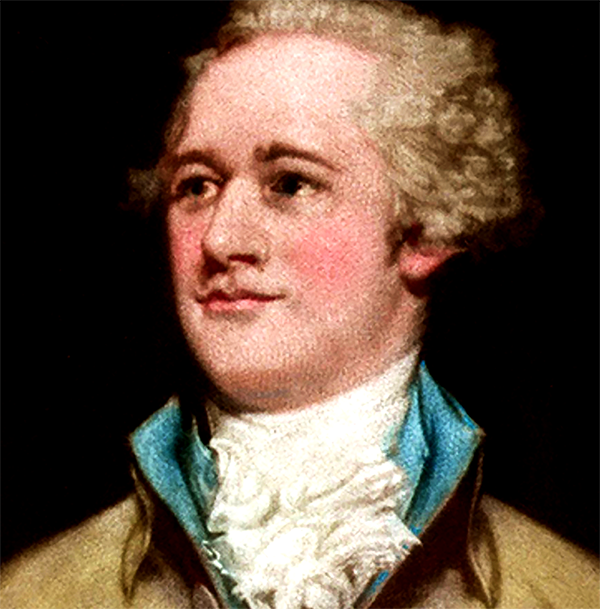
Federalist congressional leaders caucused Friday in order to agree upon the best way to exploit this new partisan advantage.  No one gets to be president without Federalist support.  Alexander Hamilton's proposal required the winner to sign off on protecting the Federalist financial infrastructure and other, mostly bread and butter, stuff.  The main point, though, was clearly to protect Hamilton's policies financing a dynamic government that encouraged the rapid development of private enterprise.  His bargain for the presidency would be the foundation for all future negotiations.


February 11, Wednesday


A fierce blizzard blew in on the morning Congress convened to tabulate the electoral votes.  Only one of 105 congressmen was absent from the proceedings.  Even Joseph Nicholson, severely ill, had friends carry his stretcher two miles to the capitol building so he could prevent Maryland from going to Burr's camp.


The balloting that day went as predicted, with Jefferson coming up one vote short of the nine needed to win.  Balloting continued on into the night, finally ending at 3 am.  Nineteen ballots in all.  Nothing budged.  House members determined to remain in session until they had a president.  By Saturday evening, after thirty-three ballots, there still was no change.  The vocabulary of frustration was all about.  There were widespread rumors of money exchanging hands for votes.  Virginia's Governor Morris threatened force if Jefferson wasn't installed as president.  Things could get out of hand.


February 14, Saturday

It was a startling occasion for John Adams, as his once best friend called upon him at the White House, mortified by the conditions Federalists required of him if he was to be president.  Thomas Jefferson had been fairly elected in the constitutionally prescribed democratic manner.  He would not allow his hands to be tied by this congressional coup d'état.  He couldn't control his supporters.  There could be civil war.  Adams was unnerved by this talk.


February 14, Saturday afternoon


Congressman James Bayard, the lone representative of the little state of Delaware, had it within his power to bring this presidential contest to a close. Until now this pugnacious Federalist consistently put Delaware in Aaron Burr's column.  There's no possibility he will vote for that slave-owning hypocrite from Virginia.  He doesn't need to.  Jefferson has eight votes and needs nine to make a majority in sixteen states.  What if there were just fifteen states?  Bayard could to vote abstain for Delaware - dropping the total of voting states to fifteen, making Jefferson president with the eight votes he already had.


February 15, Sunday morning


Bayard makes his bosses aware of his desire to pull the plug on this congressional deadlock.  "Let's not get hasty," they reply.  They still needed to determine who was in on the deal and for how much?  Get a hold of Jefferson and Burr.  Who's ready to be president right now, simply by signing off on the Hamilton deal.  It's now or never.  One of you is going to spring.


Bayard contracts a good friend of Jefferson, Maryland Republican Samuel Smith to deliver the Federalist proposal.  Smith plans to see Jefferson that evening and he promises them a response the following morning.


February 16, Monday


A couple of pro forma ballots had already been taken Monday morning when Congressman Smith arrived with news of Jefferson's acceptance of these terms.  Smith assures them he speaks as Jefferson's authorized representative.  This was good news but Federalists cautioned everyone that it could be two more days before they receive Burr's response by courier.  The matter could be settled only by knowing both men's position.


As it turns out Burr's missive arrived at the capitol building that afternoon.  It was quickly taken to the House Speaker, Federalist Theodore Sedgwick.  After opening the envelope and reading its contents, Sedgwick simply said, "the gigg is up."


Jefferson is immediately voted in as third president of the United States.  The letter with Burr's response was burned.  It's message never revealed.


Jefferson claimed to the end he never agreed to any Federalist deal.  His actions, as chief executive, indicates otherwise.  Hamilton's big government treasury policies remained in place.  Federalist bureaucrats kept their job - people he could rely on to do the job well.  The one item that appeared to have annoyed Jefferson most was having to tolerate more money being spent on the navy.


Bottom line is the problem was resolved constitutionally.  Rule of law prevailed - despite the passions, suspicions and calls to action - stability ruled.  Two passionately opposed camps agreed to shake hands, accept the result and provide for a peaceful exchange of power.  Optimism was the mood of the day.


love

  dad


©  Tom Taylor


coldValentine


Friday, October 9, 2020

Sunday, October 4, 2020

good morning jack


Path to Presidency:  John Adams

70 votes needed for a majority of the 138 votes available in the Electoral College.


New England:    39 votes

New Hampshire        6

Vermont                    4

Massachusetts        16

Rhode Island            4

Connecticut               9


Mid-Atlantic states:    22 votes

New Jersey               7

Delaware                   3

New York                   12


These states delivered all their electoral votes to Adams in 1796 and were expected to do so again in 1800.


To win his bid for reelection Adams needed an additional 9 votes.  His most likely sources would be these battleground states:

Pennsylvania            15

Maryland                   10


 It's safe to assume Noah Webster was a Federalist.  Accomplished people chose the party celebrating rational, measured judgment - businessmen successful in commerce and finance, as well as statesmen chosen from Federalist ranks for great public calling.  Federalists have controlled the presidency, congress and the courts since the nation's inception.  This twelve year winning streak helped replace resolve with complacency, and a presumptive entitlement to power.  The result is an emperor posturing and parading, unaware of his own nakedness.   


Notice how the parties were already regionally aligned.  Jefferson's small-government southern republicanism competed with the more commerce-driven motivations of northern politicians.  


States:            32 votes

Virginia                    21

Georgia                     4

Kentucky                   4

Tennessee                3


21 electoral votes in Virginia - nearly twice the twelve total New York brings to Adams.  A trio of states combine their puny totals with that of Virginia to give Jefferson a modest start of 32.


 James Callender made a living hitting below the belt.


His services were sought after by republican leaders such as Thomas Jefferson who admired his gift with the poison pen.  Callender exposed Hamilton's ongoing affair with another man's wife.  He revealed the secret dictatorial desires of George Washington and filled readers in on the warmongering policies of President Adams.  


Jefferson believed print media was his party's best means of breaking Federalist control of the Federal government.  In five years time Jeffersonian newspapers more than doubled in number to become forty percent of the market by 1800.


James Callender was an early target of the Alien and Sedition Acts enacted by Congress to silence government critics during tensions with France.  Callender would eventually serve nine months in a Richmond, Virginia prison and pay a two hundred dollar fine.


Aaron Burr picked John Adams' pocket of all New York's electoral votes, turning the president into an underdog in his bid for reelection.  Burr raided the presumed Federalist stronghold of Manhattan of its laborers and artisans, people who worked with their hands and resented the presumptive airs of Federalists.  Adams and his backers were stunned to find New York's state legislature swing to the Democratic-Republicans.  Twelve votes critical to the president had switched to Jefferson's camp, just like that. 


The scorn Alexander Hamilton expressed towards his fellow Federalist John Adams was public, frequent and personal.  Hamilton spent the summer touring New England telling folks their president was unfit.  He worked behind the scene to obstruct Adams' initiatives, including several months delay sending American envoys to Paris to successfully complete an honorable agreement with France.  Word of this accomplishment would not reach the United States until after the election on December 3rd - too late to be of help to Adams.


Charles Pinckney was a wildcard in the final hand played to win the presidency in the 1800 election.  It was a scheme promoted by Hamilton to maneuver Pinckney pass Adams for the Electoral College win.  This effort failed once it became clear Pinckney would not cooperate in this treachery.  Thomas Jefferson would be awarded South Carolina's eight votes, giving him an electoral majority of seventy-three, and presumably making Jefferson next president of the United States.  Turns out though, another candidate - Aaron Burr, got seventy-three votes as well.  This wasn't going to be easy.


The Democrats' vice-presidential nominee, Aaron Burr, was more than happy to undercut his running mate, Thomas Jefferson, for a chance at the top spot, the presidency, once he got word of the tie.  Which of these two men became president was now a matter for the House of Representatives to decide.  Unfortunately for Jefferson the House was currently controlled by his rivals, the Federalists.  For them it was a case of pick your poison.  At the same time Federalist leaders made clear their decision could be swayed by a deal and they were ready to haggle.


love

   dad


©  Tom Taylor


 coldValentine


Sunday, September 27, 2020

good morning jessicca


Word out of Paris is the French are interested in resuming talks with American envoys in order to prevent war between the two countries.   Negotiations broke down last year, in April 1798, when President Adams' personally appointed commissioners were told - payment of bribes were required from them if they were to be heard.  Two of the three diplomats soon sailed for home, briefly leaving behind Elbridge Gerry, the sole member of the group not of Adams' Federalist Party and the one most open to trusting French intentions.  


 Men demanding bribes from Adams' envoys were believed to represent French Foreign Minister Charles Talleyrand, despite his denials before France's ruling revolutionary committee, the Directory.  The American press named the scandal the XYZ Affair once dispatches made public by the Adams Administration referred to these agents as "X", "Y" and "Z".  The resulting diplomatic impasse came during a time when warships of the two former allies were sometimes exchanging fire with one another on the high seas, particularly in the Caribbean.


War between Britain and France led to the current military tensions as the powerful navies of both nations preyed upon neutral American shipping that traded with their enemy.  Ratification of Jay's Treaty by Congress ended England's aggressions towards American commerce while stoking French fears that the United States had entered into an alliance with its enemy, Great Britain.  


Reports of Talleyrand's desire to resume talks were welcomed by Adams, as the president struggled to contain the passions for war coming from within his own Federalist party.  Domestic response to the crisis broke along party lines with Jefferson's followers hopeful for a republican outcome to the French Revolution while Federalists saw the upheaval as the direst expression of democratic excess.  Adams feared he would be pressured into leading a divided nation into a war that could only bring disastrous consequences to his young country.


George Washington recommended his golden boy, Alexander Hamilton, to lead the large Provisional Army being raised in response to threats of a French invasion.  Adams did as Washington wished despite his misgivings over handing such authority to his main rival for power in the Federalist Party.  The alarm sounded when letters Hamilton wrote to a confidant made their way to President Adams.  Here Hamilton makes inflated threats to invade Florida, taking it and Louisiana from the Spanish before France gets the opportunity.  He further threatens to round up radicals in Virginia opposed to the Union.  Adams responds by ordering the return of diplomats to Paris.  He does this without notifying his cabinet - knowing some of them might resign in protest as this peace initiative would lend legitimacy to France's ruling revolutionaries as well as hasten the demise of Hamilton's Provisional Army.


When taking over the presidency in 1796 Adams accepted as his own the cabinet of George Washington, without appreciating the degree of loyalty these men felt towards Hamilton.  Years of insubordination and betrayal culminated in an explosive exchange between Adams and his Secretary of War, James McHenry.  Having been recently chosen as his party's presidential nominee for 1800, Adams felt free to also fire his Secretary of State, Timothy Pickering the following day.  These moves against the Hamiltonian wing of the party tore the Federalists asunder in the course of this election year.


 John Adams would face off against Thomas Jefferson, his competition for president in 1796 and his own vice-president at the time - due to a quirk in the Electoral College that awarded this office to the second place finisher.  The rise in the role of parties in democratic politics quickly proved the naivety of this Constitutional provision.  In the course of Washington's first administration the nation had rapidly separated into two ideological camps with competing views for America.


While Alexander Hamilton busied himself with Army duties, New York's other political star, Aaron Burr, was busy stealing that vote-rich state out from under the Federalists.  Electoral College votes that had gone to Adams in 1796 would certainly now go to Jefferson, requiring the president to compensate by raiding Jefferson's southern base for votes, if he were to have any chance of winning reelection.  Burr's deed would win him second spot on Jefferson's ticket as the Democratic-Republican Party's nominee for vice-president.  As it turns out Burr saw the presidency itself as his proper reward.


love

   dad 


©  Tom Taylor 


coldValentine 


Sunday, September 20, 2020

good morning jeremy


It required two weeks of being jostled about a carriage while traveling the rutted roads John Adams took from his home in New England to the President's House in Philadelphia, still the nation's capital.  The residence provided the country's newly elected second president came unfurnished.  A year's rent of $2,750 would be subtracted from his $25,000 annual salary.  At age sixty-one Adams planned a frugal retirement had he not won the presidency as he would have been considered too old to resume practicing law.


The Whiskey Rebellion, a taxpayer revolt in western Pennsylvania was suppressed only when Washington, as president, rode into the region at the head of his troops, bringing the matter to a peaceful resolution. Of greater concern for Washington was the threat to national security brought about by war between Great Britain and France.  Both European powers were inclined to block commerce with its adversary, despite signed guarantees protecting trade with neutrals.  More than four hundred commercial ships were confiscated by England as they carried goods between U.S. ports and French Caribbean islands, their crews sometimes impressed into the British navy.  Similarly French warships confiscated cargo from American ships destined for English ports.  Washington, and later Adams, demonstrated skill in reaching a diplomatic solution that required accurately assessing foreign threats and managing domestic anger.


No nation understood the role money played in the creation of wealth better than the British.  It was England, after all, that published Adam Smith's economic treatise on capitalism, The Wealth of Nations - that other seminal writing of 1776, along with the Declaration of Independence.  It was Hamilton's appreciation of this English proclivity toward investment that led his efforts to tie America's fortunes with Great Britain.  Here was a true win-win scenario.  The goal of Hamilton's policies as Washington's Treasury secretary was to entice English investors to provide the funding needed to develop America's promise into riches for all.  It was this Hamiltonian emphasis on believing the business of America is business that so upset republican revolutionaries such as the philosopher-king, Thomas Jefferson. 


How extraordinary it was to live amidst the wilderness dressed in aristocratic finery.  It was clear to all you were among society's elite.  Truth be told, though, you would never attain the English landed gentry's luxury of idle time.  One's wealth in the New World was too much based on speculative land investments and seaborne trade deals of comparable risk.  Even once wealthy Federalists of historic note, such as Robert Morris and James Wilson, ended their careers either in bankruptcy or, on occasion, locked up in debtor's prison.


Oliver Wolcott, Hamilton's successor at Treasury, was among a fortunate few American gentry able to afford working full time in public service.  Hamilton's leave of Washington's cabinet was prompted by his need to replenish the family's coffers by returning to Wall Street.  Washington settled on Timothy Pickering as Jefferson's replacement at State only after the president's first six choices turned him down.  No government paycheck could alone cover the expenses of a true gentleman.


The presidential election of 1796 was the first partisan contest for the office now that George Washington had retired to Mount Vernon.  Federalists favoring Hamiltonian policies backed John Adams while Republicans had Thomas Jefferson as their champion - competing visions for America guaranteed to draw passionate argument.  Still, only a quarter of eligible voters bothered to vote that year.  Your polling station may be a great distance from your farm requiring you to travel the better part of the day to cast your ballot, neglecting your chores.


A frontiersman discovers some neck of wilderness to be heaven on earth and returns the following year bringing with him his family and closest friends.  In time clan gatherings grow into settlements, often taking the name of its founder, such as Boone.  Native people are displaced as the procession of emigrants moves the frontier ever west, over the Appalachians and into the tribal lands of the Ohio Valley. 


love

   dad


©  Tom Taylor


coldValentine


Sunday, September 13, 2020

good morning justin


King Louis XVI of France was an unlikely hero of the American Revolution but his fleet's blockade of Yorktown enabled Washington to checkmate the British troops trapped there and win independence for the colonies.  Payback was the French monarch's reward in engineering England's defeat in 1781.  Not twenty years prior it was the British expelling France from North America in the French and Indian War.  Now with both nations removed from the domain there was little to resist colonial expansion west and the birth of a new republic.  


As for the young French monarch, he was a man out of time. 


Thomas Jefferson viewed French reformers as kindred spirits in republicanism - power residing with the people.  John Adams saw these same revolutionaries as dreamy, ill-informed novices ill-prepared to hold power.  Both men while serving as diplomats to France saw the nation as a powder keg ready to blow.  War, debt and stagnant economics had people already simmering when the affairs of state were handed off to nineteen year old Louis XVI in 1774.  Aristocracy was ill-suited for the times.  Louis knew it.  Attempts were made for a peaceful transition to constitutional monarchy but storming the Bastille in 1789 turned the French Revolution into carnage and confusion, overseen with cruelty and oppression.


A black-eye for republicanism, fears Adams.  Does this mean you won't be honoring your alliance with the United States?


As author of the Declaration of Independence how could Thomas Jefferson not meddle in French reform under the monarch's nose while Minister to France?  Jefferson sees a French constitutional system ahead.  They are "awakened by our revolution."  About the time of the Bastille, Washington calls Jefferson home to be his Secretary of State.  Jefferson had hoped to be part of the unfurling of a new French republic.  Instead he was to return to a Federalist Philadelphia and serve people having a fundamentally different vision for America than his.  


Upon leaving the army George Washington pledges to never again hold public office.  Not with this government, anyway.  To its last the war had been verging on defeat.  Congress had no money to supply the army.  Yorktown was the hail Mary that worked.  


In September, 1788 a new Constitution had been ratified and a government was being formed in Philadelphia.  Alexander Hamilton writes Washington a letter requesting him to be their president.  His selection was the unanimous choice of the Electoral College.  Refusing to serve would leave everyone with a sense of desertion.  

Washington's consent meant Hamilton would play an important role as Secretary of the Treasury.  Hamilton's policies on money and power were controversial but were also shared by Washington.  His stature insured unpopular measures would go largely unchallenged.  Political criticisms voiced against Washington's administration were directed at Hamilton - not Washington.  At least through the first term the president remained largely an untouchable.


Son of a Scottish drifter, Alexander Hamilton spent his short boyhood on St. Croix, an island where more than ninety percent of the population was enslaved.  An orphan by twelve Hamilton begins work as a clerk for a mercantile firm having connections in New York.  Four years later his employer sends him off to what is now Columbia University.  In 1775 he quits school and joins the Revolution, soldiering with Washington's ragtag army.  Within two years he is one of Washington's aide-de-camp.  Hamilton has the daring needed to dazzle powerful men with his brilliance.  His rise is meteoric. 

The moneyed interests of the Northern states endorsed Hamilton's efforts to transform a collection of agrarian states into a nation running on economic capitalism.  He believed government should promote the building of mills and factories as manufacturing was the true source of national power.  With no money of its own, Hamilton wanted America to mend its ties with England so the United States could attract British investment.  Commerce needed to think big - continental, all the Atlantic was their market.  

Thomas Jefferson's vision of a republic was one populated mostly with small farms.  The government would be local, exercising only enough authority to do minimal harm to its citizens.  Freedom was a plot of land and the right to think what you please without the intrusions of powerful interests.  For Jefferson Hamilton's priority for generating wealth was an appeal to greed and a corruption of revolutionary values.


Hamilton was on a Congressional win streak without any organized opposition.  Those hoping to preserve the current order would naturally rally round Thomas Jefferson, champion of individual rights.  These were people one irate Virginia planter described as neighbors who "conceived himself, in every respect, my equal."  

Here was the egalitarian spirit Jefferson needed to harvest as votes against Hamilton's Federal agenda for financial empire.  Prior to the 1792 election Jefferson, along with his friend James Madison, toured the backcountry in an effort at grass roots organization under a banner Madison suggested calling the Republican party.  This was not the party of Lincoln.  Jefferson was a Democrat before the word had a polite meaning.


Thomas Jefferson's political foil would turn out to be his good friend John Adams, Washington's vice president and heir to the presidency in 1796 because of the continued Federalist dominance of the Electoral College.  Adams would make a worthy adversary for Jefferson.  His fearless nature was evident as early as 1770 when he successfully defended the British Troops accused of murder in the Boston Massacre.  Adams made lifelong friendships despite the fact he "regarded an argument as the ideal form of conversation."  

The presidential contest of 1800 pitting John Adams against Thomas Jefferson was a raw, bare knuckled partisan brawl.  With Washington retired from the scene the Founding Fathers freed their passions attacking the other's vision of what it was the Revolution meant.  Twenty-five years earlier these revolutionaries were willing to die for what they believed.  Here now, though, was the first real test as to whether the clash of convictions could be resolved in a peaceful, democratic fashion.  It would take faith in rule governed foremost by the law of the new and, as yet, untested Constitution.


love
   dad


©  Tom Taylor


Sunday, September 6, 2020

good morning jacob


p a r t y    p o i n t    o f    v i e w


Hugh Brackenridge graduates from Princeton, son of a humble Scot farmer.  About the time Lord Cornwallis surrenders to Washington's troops at Yorktown, Brackenridge heads west, over the mountains and into the wilds around Pittsburgh, seeking opportunity.  He makes money, starts a newspaper, wins election for a seat in the state legislature by promising his backers he would make buying land easier for the small farmer.  Once in Philadelphia, the state capitol, Brackenridge falls in with wealthy financier Robert Morris and his powerful friend, the attorney James Wilson.  He is easily seduced by their flattery.  How cosmopolitan he is, they marvel.  He's definitely not like the usual Huns and Vandals they normally deal with coming out of those hills.

Brackenridge votes against the farmers back home, favoring instead the interests of a large bank.  He is quoted in the newspaper as calling voters back home "fools" for not realizing only educated people could understand these matters.  Brackenridge loses the next election and moves on with his life, deciding politics is not his calling.


William Findley defeated Brackenridge for office in 1788, the year the new Constitution was ratified.  Until now the politicians fashioning this new nation were the top tier, society's notables like Washington, Hamilton and Franklin, people knowing great success.  William Findley was different.  He spoke for the man guiding a plow - rough, individualistic people.  Voters.  

Make no bones about it William Findley speaks for you.  We're talking the price of grain, not classic Greek principles.  Cut out land speculators and powerful banks, enabling regular people to be land owners.  While we're at it make education free to all.  Outlaw slavery.  These are the interests Findley supports, promised in advance.

Until now Founding Father politicos preferred the lawgiver image being that of Solomon rendering his wisdom.  But here we have Findley openly exchanging promises for votes.  Once Washington retired to private life the widespread posturing of lawmakers as personally disinterested citizens was quickly exposed as hypocrisy, now obsolete.  Like-minded individuals organized into groups identified as parties.  Strength in numbers.  Democracy in action.  Possibly mob rule.


Federalist John Adams sat out the campaign for president in 1796 on the front porch of his home in Quincy, Massachusetts.  His opponent, Republican Thomas Jefferson, did much the same by hanging around Monticello, his home in Virginia.  It was considered unseemly to want a job bad enough to fight for it.  Let your supporters do the politicking on your behalf.  You graciously accept the burden of office if victorious.

Both candidates believed in the representative form of democracy - a republic with built-in checks dispersing the concentration of power.  However Adams saw government as a force for good while Jefferson believed energetic government the source of tyranny.  The leading Federalists - Washington, Hamilton and Adams all pushed one nation, indivisible rule.  Jefferson advocated a democracy that is best kept local, close to home - states' rights.  Around these divergent views coalesced the interests making up the beginnings of two great political parties.


An admirer of Thomas Jefferson, William Findley of Pennsylvania became a Republican.  Federalist opponents defamed these Republicans by calling them democrats - demagogues inciting mob rule.  Findley proudly accepted the label Democrat.  For him it meant man of the people - someone fighting for their interests with conviction, passion.  This is what you do when you ply your trade in representative democracy.  Your challenge is to draw together divergent interests under your lone banner.  No small talent - especially when your reach extends over large populations with their own centers of power.  

Is total transparency a good idea when bringing competing interests together?  The Constitution of 1787 was fashioned in a shroud of complete secrecy.  

Transparency comes with the popularity of something on the order of World Peace.  Politicians looking for compromise on difficult issues don't want a controversy focused on every thought considered.  Common good calls for satisfactory resolution of the problem under legal means.  All else is a corruption of the process involving human nature.  Since all our enterprise is human this fact needs keeping always in mind.


love
   dad


©  Tom Taylor