Showing posts with label North Africa Campaign. Show all posts

Friday, February 10, 2012

Politics of Operation Torch

North Africa Campaign
1942
C L I C K     T O     E N L A R G E


German leaders were surprised by the Allied invasion of North Africa and puzzled by the extent of American involvement.  Most of the 60,000 troops of Operation Torch were American, making landings in Morocco around Casablanca as well as Algiers and Oran in Algeria.  Hitler and others couldn’t help but wonder, what was in it for the Yanks?  America had no stake in North Africa.  
Picture:  1556 x 1246 at 200 dpi - Atlantic Charter Foundation


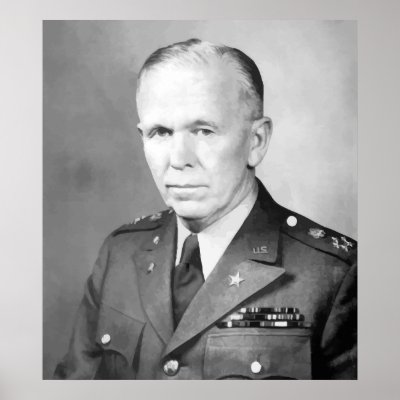
U.S. military leaders like Chief of Staff General George Marshall couldn’t agree more.  President Roosevelt viewed Germany as a greater threat to America than Japan and agreed with Churchill, Britain’s Prime Minister, on giving Europe precedence over the Pacific Theatre.  Roosevelt’s military advisors wanted a landing in France to directly challenge Hitler’s rule over Western Europe.  Stalin, leader of the other Allied partner – the Soviet Union – was also pressing for an invasion of France in 1942, to siphon off some of the German strength baring down on his troops, who were currently staggering under the full weight of the Nazi war machine. 
Picture:  400 x 400 - Reddit 


Churchill had other ideas, however, arguing that an unprepared army wading ashore against the powerful Wehrmacht would be a disaster.  Winning the war with Germany would require destroying her army and why not begin where it would be the most vulnerable?  American troops landing in France’s North African colonies would likely meet only token resistance.  Moving this Anglo-American force east would squeeze General Rommel’s Afrika Korps between it and General Montgomery’s advancing Eighth Army.  These two Allied armies would combine to eliminate the Axis presence in North Africa.  The close proximity of a victorious Allied army in Tunisia to Sicily, and Italy itself, made these enemy held lands the likely next targeted steps in a linked chain of strategic objectives.       
Picture:  2175 x 2987 - PBS


It took a direct order from Roosevelt to bring the American military on board with Torch.  Yes, the President’s reasons were political.  If the U.S. Army was not engaged with German units in 1942, and realistically that wouldn’t be France, then pressure for a Pacific First strategy would be overwhelming.  Revenge for Pearl Harbor would be the real diversion from the best strategy based on U.S. interests.  Fixating on Japan would give Russia reason to make a separate peace with Germany and it would leave Britain to nibble at the periphery of Nazi power.  Japan’s defeat was inevitable.  It was an island nation with long, supply lines vulnerable to being choked by submarine attack.  It’s defensive ring relied too much on garrisoned islands with isolated troops, that could be strangled by blockade and eventually picked off one at a time by a concentration of American amphibious force.  Once the issue with Japan was settled America could now focus all her resources on Germany but time would have favored the Third Reich.  There may well have been in place a true Fortress Europa with no Eastern Front to divert German armor.  The cost to free Europe from the Nazi’s grasp may well be prohibitive for any democratically elected government.  
Picture:  503 x 571 - Reddit


The will of the people might favor political accommodation, turning a deaf ear to rumors of atrocities from within Hitler’s realm.  The cost in lives and treasure subduing Japan is all that reasonably can be asked of us, we might say.  Or we might find ourselves economically isolated and be forced to pursue a military solution on what would now be far more unfavorable terms.  Eventually we would have The Bomb but, in 1942, our leaders were very much concerned Germany was also striving to be nuclear armed.  That was a threat not to be ignored. 
Picture:  500 x 450 - Digital History


Even the best of generals can sometimes be faulted for being too focused on military logic to appreciate the big picture.  It is to Roosevelt’s credit that he embraced his responsibility as Commander in Chief and overruled the best professional advice of his top military lieutenants, allowing green American troops to experience their first taste of battle in conditions where early setbacks would bring valuable lessons and not potentially game-ending cataclysmic defeat.
Picture:  479 x 577 at 96 dpi - PDX Retro

Tuesday, February 7, 2012

Prelude To Kasserine

North Africa
1943
C L I C K     T O     E N L A R G E


War is too important to be left to generals, French Prime Minister Clemenceau is famously reported to have said near the end of World War I.  Decision making in war sometimes defies military logic.  
Picture:  300 x 300 - Quote Bunny


Hitler saw no military reason for sending his precious panzer divisions to North Africa while he was embroiled in a life or death struggle with hundreds of Soviet divisions on the Eastern Front.  The Deutsches Afrika Korps existed out of political need to protect Mussolini.  Were Italy to lose her African colonies to the Allies, Mussolini’s hold on power would become tenuous and Italy in danger of switching sides in the war. 
Picture:  1199 x 1600 - History Martinez


Hitler’s brilliant battlefield tactician, General Erwin Rommel, defied orders limiting his offensive actions to Libya and drove his forces deep into Egypt, confronting Britain’s Eighth Army at a place called El Alamein.  Rommel’s thirst for decisive victory put his troops in a near impossible situation by ignoring his own logistical limitations.  He had stretched his supply lines from ports in Italy to their farthest possible reach of two thousand miles.  The best his army could hope for was provisions sufficient to sustain a defensive posture only.  Rommel’s talent for highly mobile armored maneuvering required fuel that just wasn’t available.  
Picture:  303 x 382 - Lindsey Williams


His only hope for salvation would be an uncharacteristic offensive blunder by the ever meticulous and cautious General Bernard Montgomery, leader of the British Eighth Army.
Picture:  585 x 350 - Tiny Pic


It wasn’t to be, and Rommel’s Afrika Korps began a long retreat in November, 1942 with British forces doggedly pursuing them across the length of Libya and into Tunisia where the Panzerarmee would attempt to bolt shut the door at a French built fortification known as the Mareth Line.
Picture:  460 x 276 - Reddit


General Dwight Eisenhower commanded a combined army of British, French and American forces stretched thinly over 250 miles of hills and mountain ridges that bordered the Axis held coastal regions of Tunisia.  Eisenhower is content to maintain a defensive posture while his forces build in strength, preparing a thrust to the coast later in the spring that intends to first divide, then overwhelm opposing German and Italian troops.
Picture:  250 x 317 - Reddit


General Jurgin von Arnim is fully aware he cannot hope to match the Allies’ build up of men and material as the German Wehrmacht has been depleted of resources by setbacks in Russia, including the impending destruction of the Sixth Army at Stalingrad.  Through much of January, 1943 Arnim’s Fifth Panzer Army has been methodically eroding Eisenhower’s strength with short, quick jabs at vulnerable positions, particularly among the poorly equipped French troops.  Now, on January 30, a more ominous breach of the Allied line has occurred at a French held mountain pass named Faid.  Allied leaders believe it is a diversion.  They expect von Arnim to attack further north near Fondouk and threaten the British First Army by breaking into their rear.
Picture:  480 x 676 at 300 dpi - Worth Point


The Allies move their few armored reserves into the area and their miscalculation would shortly open the door for a dangerous penetration by General Erwin Rommel’s veteran panzers.  The action delivers a stunning defeat to inexperienced, poorly trained American troops and briefly threatens to hurl the Allies back into Algeria, setting back their chance for victory in North Africa.
Picture:  800 x 503 at 300 dpi - Reddit