Showing posts with label Bernard Montgomery. Show all posts

Saturday, October 5, 2024

Mersa Matruh


The British 8th Army crossed over the border

into Egypt a beaten force; their tank formations

destroyed and doubt replaced confidence in their

view of leadership.  


General Auchinleck stuck his neck way out when

he picked Lieutenant-General Ritchie to lead the

8th Army in a winner-take-all confrontation with

Rommel's Afrika Korps.  A good number of 

battlefield experienced generals were ignored 

in favor of this untested staff officer.


Tobruk was captured and the 8th was 

nearly destroyed.  Firing Ritchie wasn't

enough.  Churchill would also fire Auchinleck

a couple months further down the road.


Rommel remained steadfast in adversity because

he believed he could always out-general the British.

Tobruk brought him the top rank of Field Marshall

and plenty of professional jealousy.  War of epic

scale raged with the Russians in the east while

Rommel soaked up the glory with a two division

sideshow in North Africa.


 The plan was to invade Malta once Rommel

cleared Libya of the British.  Holding North African

ports such as Tripoli and Tobruk wasn't enough

so long as Britain continued to sink Rommel's 

supplies coming from Italy.  Taking Egypt and the

Suez depended on Germany clearing the  

Mediterranean of the RAF and the subs

that patrolled from this strategic base.


 Rommel wants to pursue the British into Egypt now.

The opportunity to destroy the 8th Army is at hand.

Hitler agrees.  He's not keen on invading Malta.

It would be a big commitment of resources just when

everything possible is being done to supply the war

in Russia.  Besides Hitler doesn't trust Mussolini.

The Italians are incompetent and he is sure he would

be left to take Malta alone.


 Bernard Montgomery.


The guy talks truth to power.

Most everyone finds him to be a royal pain.

Churchill picked him to straighten out the

Eighth Army, but first they must survive

Rommel's push to destroy the British

at Mersa Matruh.


* * * * *


©  Tom Taylor-
-


OVER   EASY


coldValentine


Thursday, November 7, 2013

11 May, 1940 - Flanders

Battle of Flanders

German anti-tank crew in Belgium, 1940

By the second day of battle the German army was proceeding mostly to plan while confusion was already beginning to set in with the Allied forces.  Two reasons can quickly be identified as the root cause of Allied disorganization.  The more significant is probably the lack of coordination between Allied command and the command of Belgian and Dutch forces, which acted independent of any overall command structure.  This contributed to the friction over where troops would be assigned along the River Dyle defensive line.  A second significant problem was the inability of different commands to communicate with one another, making it nearly impossible for battlefield commanders to address problems between units and also obscuring the changing nature of the battle itself.  Contributing to the inability to communicate was the policy of French High Command to maintain mostly radio silence during the period leading up to the outbreak of war on May 10.  Radio operators had little, if any, actual experience on their equipment.  The result was that orders and messages between commands often depended upon overburdened and insecure commercial phone lines.  When Bernard Montgomery, commander of the British 3rd Division, reported a dispute between his unit and a Belgian division over who had responsibility for a sector on the defensive line, his commanding officer, General Alan Brooke found it exceedingly difficult to reach his own headquarters in an attempt to resolve the matter.

Still the Germans were not without problems.  One of the arguments against relying on a major offensive to sweep through the Low Countries was the numerous waterways that slowed movement and provided natural defensive barriers to oncoming troops.  General Fedor von Bock, Commander of Germany’s Army Group B, was particularly frustrated with the snarled traffic approaching a critical bridge that crossed the Maas River into Holland.  His valuable 9th Panzer Division was stalled and vulnerable to air attack.  Fortunately for his men no Allied aircraft ever appeared.  His 4th Panzer Division was nearly without fuel because of the difficulties in delivering supplies across the Maas and Albert Canal.  In desperation he was able to fly in 20,000 liters of fuel but that amount wouldn't take a thirsty armored division very far down the road.

Better progress was being made further south as the 3rd Panzer Division had crossed the bridge at Maastricht and was now pushing into Belgium.  German divisions were beginning to cross the Albert Canal in number, forcing Belgian troops into a general retreat towards the next available defensive line along the River Dyle.  They would show up just as French and British troops were arriving to set up their own defensive positions.  At one point Belgians fired on Montgomery’s 3rd division, believing them to be German paratroopers.  The success of the German onslaught reinforced French conviction that they were facing the full weight of the German offensive in this Battle of Flanders.

Meanwhile, Army Group A was making steady progress through the Ardennes countryside to the southeast.  Heinz Guderian’s lead tank divisions, the 1st, 2nd and 10th Panzer Division had all fought off token resistance from both Belgian troops and French cavalry.  By the evening of this second day, the 1st Panzer Division was held up by stiffening French resistance just outside the town of Bouillon, a mere 10 miles from Sedan and their first critical objective – the River Meuse.  The success of Germany’s war in the West depended on the ability of their tanks to cross this river and break through French defenses on the far side.  If they succeeded in making it across their efforts and sacrifice would be rewarded with terrain perfectly suited for tank operations.  It would be open fields behind the enemy’s lines all the way to the English Channel, or Paris, or behind the Maginot Line – wherever the German command most desired to go.

Related Topics:

10 May 1940 - Flanders

12 May 1940 - Flanders

Blitzkrieg

Objective:  France 1940


Tuesday, February 7, 2012

Prelude To Kasserine

North Africa
1943
C L I C K     T O     E N L A R G E


War is too important to be left to generals, French Prime Minister Clemenceau is famously reported to have said near the end of World War I.  Decision making in war sometimes defies military logic.  
Picture:  300 x 300 - Quote Bunny


Hitler saw no military reason for sending his precious panzer divisions to North Africa while he was embroiled in a life or death struggle with hundreds of Soviet divisions on the Eastern Front.  The Deutsches Afrika Korps existed out of political need to protect Mussolini.  Were Italy to lose her African colonies to the Allies, Mussolini’s hold on power would become tenuous and Italy in danger of switching sides in the war. 
Picture:  1199 x 1600 - History Martinez


Hitler’s brilliant battlefield tactician, General Erwin Rommel, defied orders limiting his offensive actions to Libya and drove his forces deep into Egypt, confronting Britain’s Eighth Army at a place called El Alamein.  Rommel’s thirst for decisive victory put his troops in a near impossible situation by ignoring his own logistical limitations.  He had stretched his supply lines from ports in Italy to their farthest possible reach of two thousand miles.  The best his army could hope for was provisions sufficient to sustain a defensive posture only.  Rommel’s talent for highly mobile armored maneuvering required fuel that just wasn’t available.  
Picture:  303 x 382 - Lindsey Williams


His only hope for salvation would be an uncharacteristic offensive blunder by the ever meticulous and cautious General Bernard Montgomery, leader of the British Eighth Army.
Picture:  585 x 350 - Tiny Pic


It wasn’t to be, and Rommel’s Afrika Korps began a long retreat in November, 1942 with British forces doggedly pursuing them across the length of Libya and into Tunisia where the Panzerarmee would attempt to bolt shut the door at a French built fortification known as the Mareth Line.
Picture:  460 x 276 - Reddit


General Dwight Eisenhower commanded a combined army of British, French and American forces stretched thinly over 250 miles of hills and mountain ridges that bordered the Axis held coastal regions of Tunisia.  Eisenhower is content to maintain a defensive posture while his forces build in strength, preparing a thrust to the coast later in the spring that intends to first divide, then overwhelm opposing German and Italian troops.
Picture:  250 x 317 - Reddit


General Jurgin von Arnim is fully aware he cannot hope to match the Allies’ build up of men and material as the German Wehrmacht has been depleted of resources by setbacks in Russia, including the impending destruction of the Sixth Army at Stalingrad.  Through much of January, 1943 Arnim’s Fifth Panzer Army has been methodically eroding Eisenhower’s strength with short, quick jabs at vulnerable positions, particularly among the poorly equipped French troops.  Now, on January 30, a more ominous breach of the Allied line has occurred at a French held mountain pass named Faid.  Allied leaders believe it is a diversion.  They expect von Arnim to attack further north near Fondouk and threaten the British First Army by breaking into their rear.
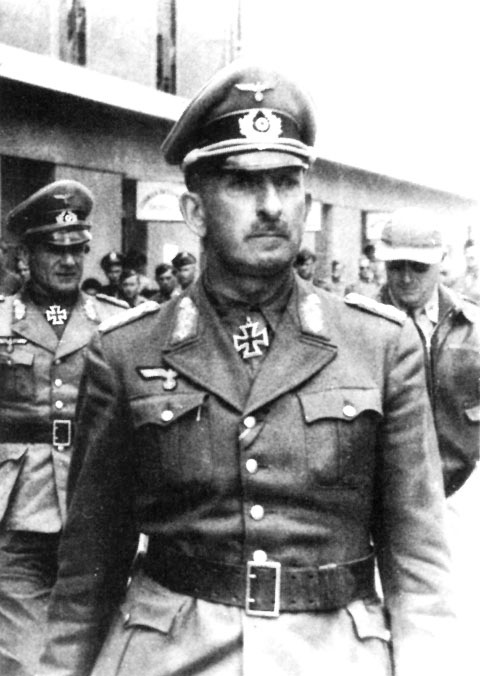
Picture:  480 x 676 at 300 dpi - Worth Point


The Allies move their few armored reserves into the area and their miscalculation would shortly open the door for a dangerous penetration by General Erwin Rommel’s veteran panzers.  The action delivers a stunning defeat to inexperienced, poorly trained American troops and briefly threatens to hurl the Allies back into Algeria, setting back their chance for victory in North Africa.
Picture:  800 x 503 at 300 dpi - Reddit